Orbit
Overview
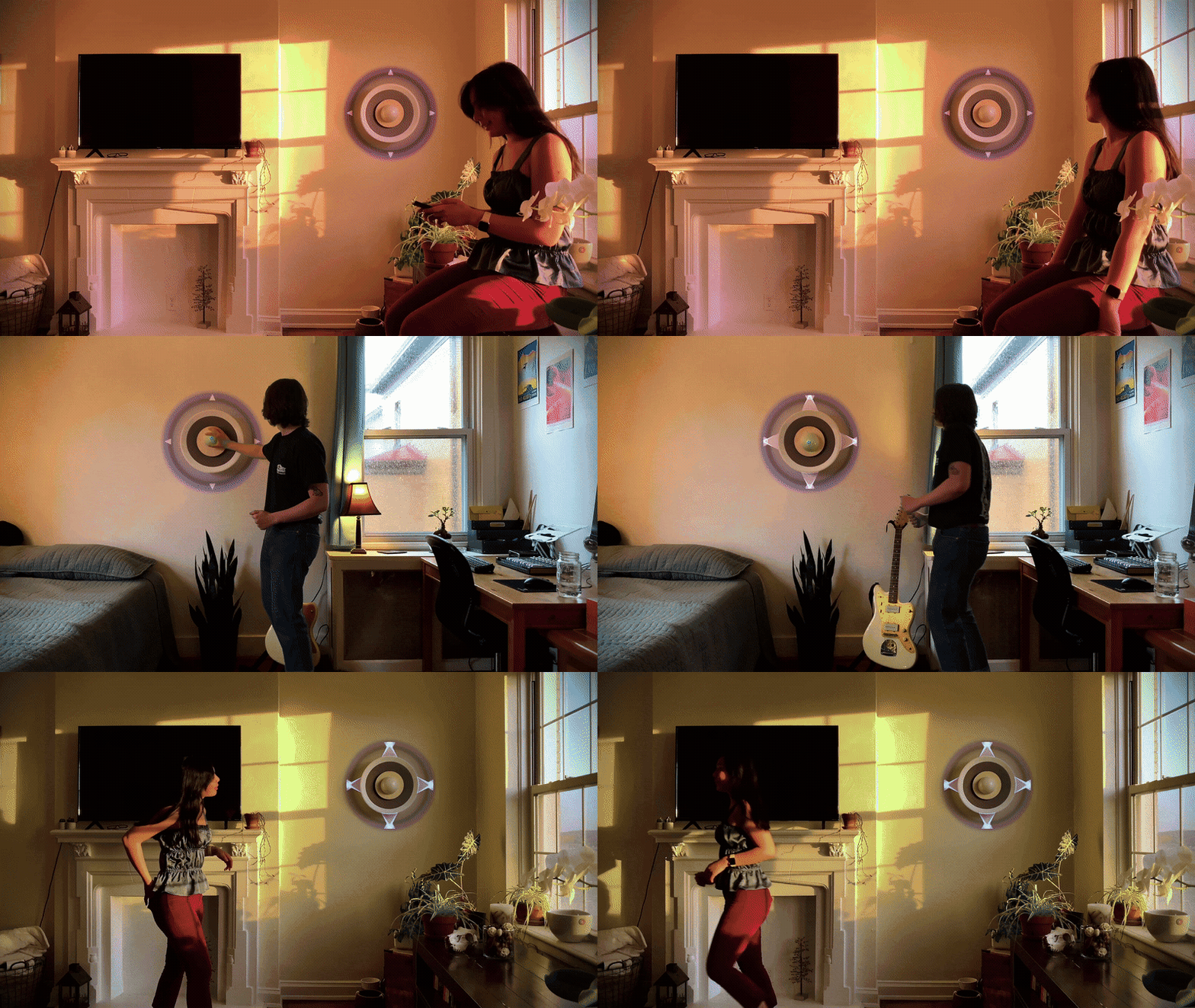
Orbit is a wall-speaker concept for two people who live apart. Sharing songs and reactions creates light patterns that form a visual record of their listening history.
We explored how sharing music could support connection at a distance. I contributed interaction design, concept development, and physical prototyping with Dorcas Lin and Franklin Guttman. Together, we developed app screens, motion studies, and a physical prototype to explore that idea.
Demo
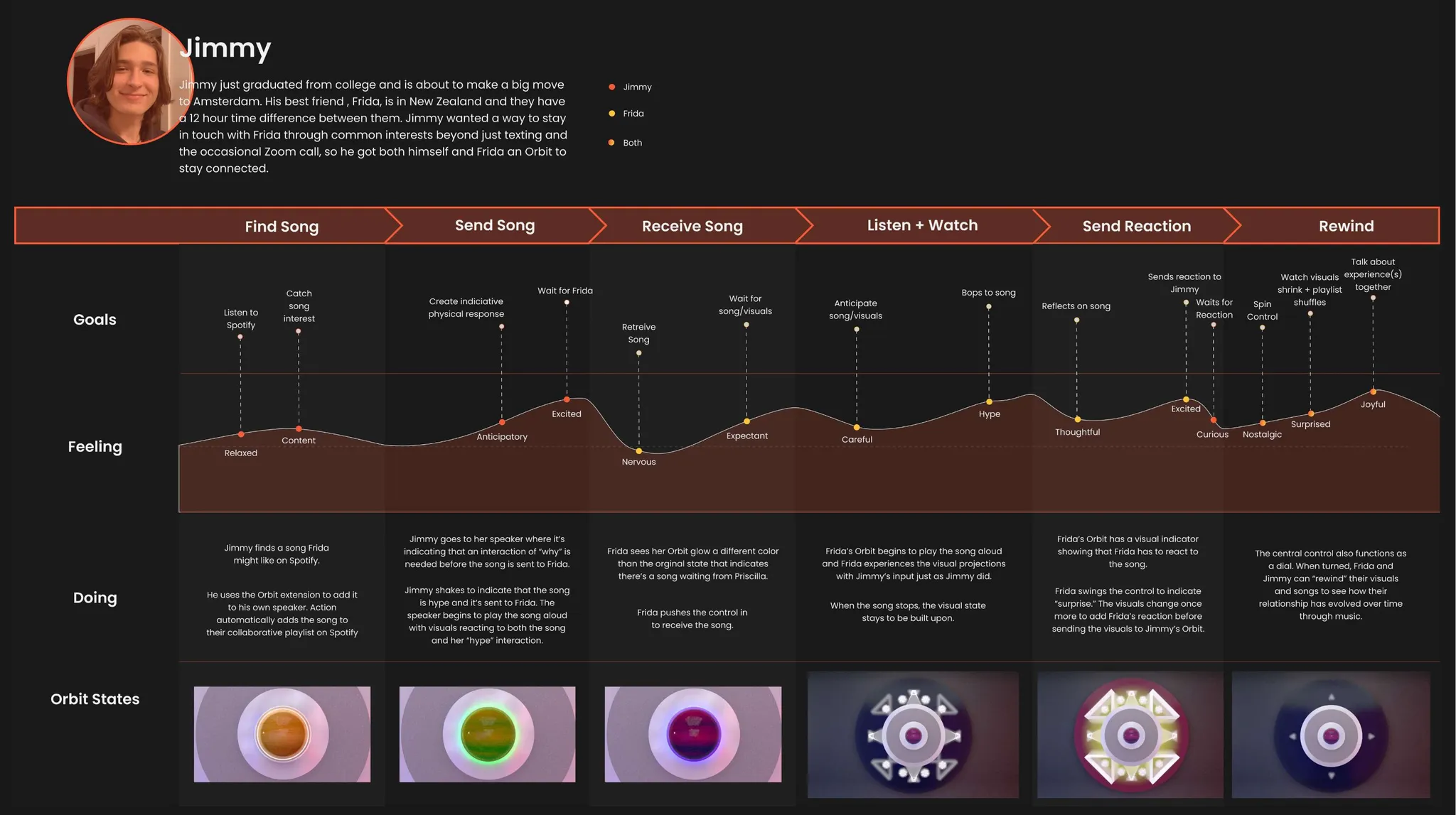
Interaction flow
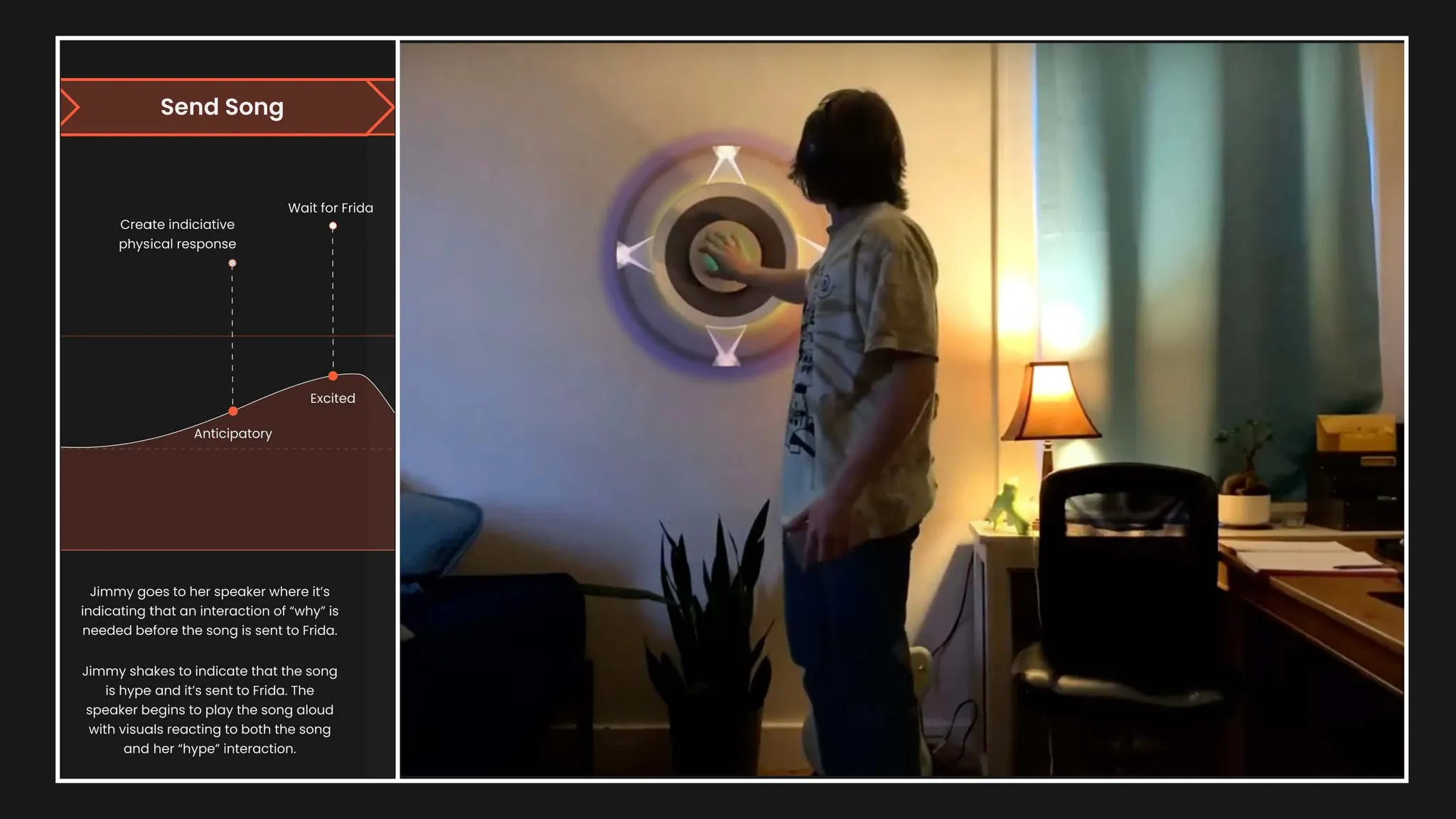
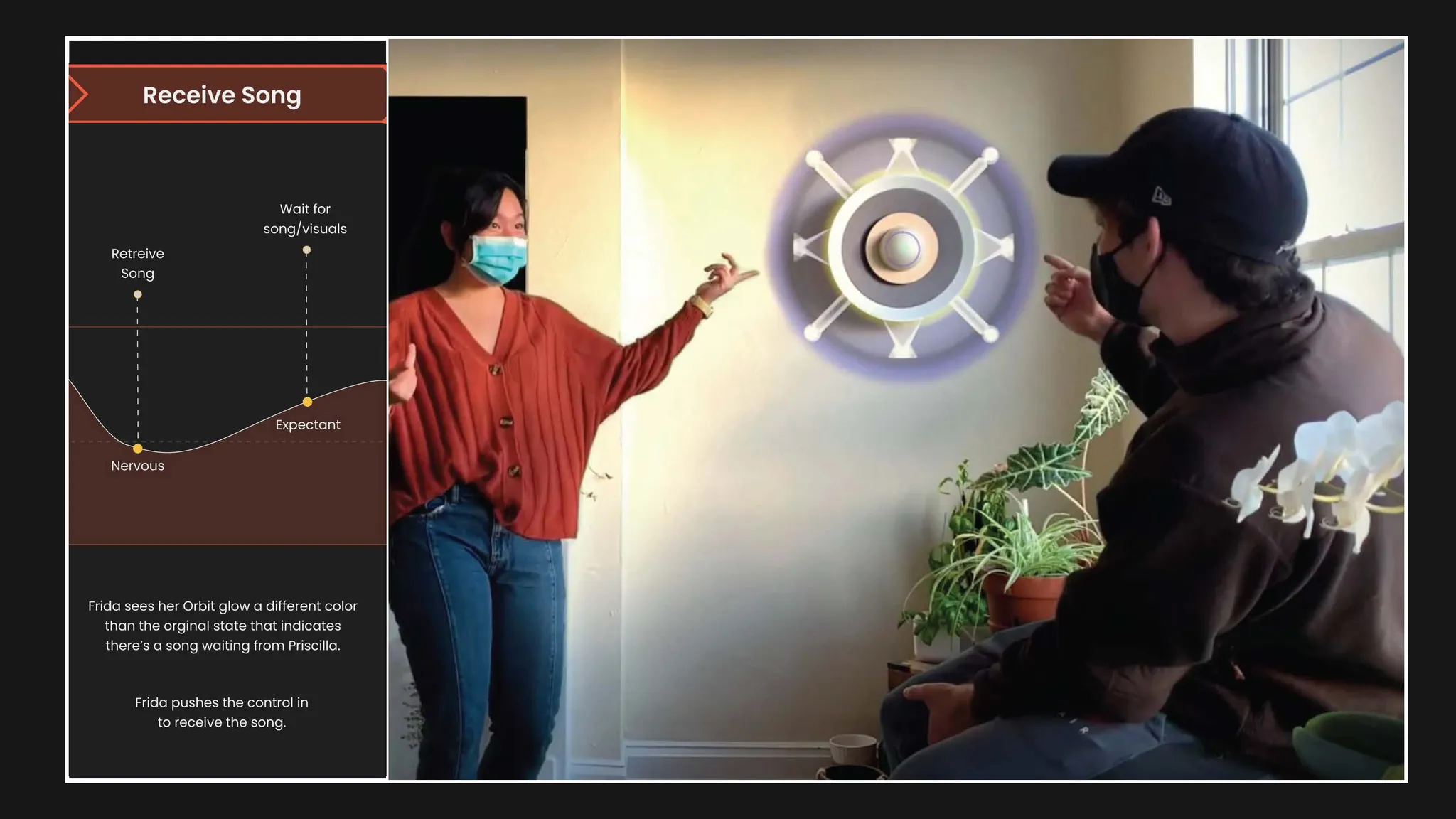
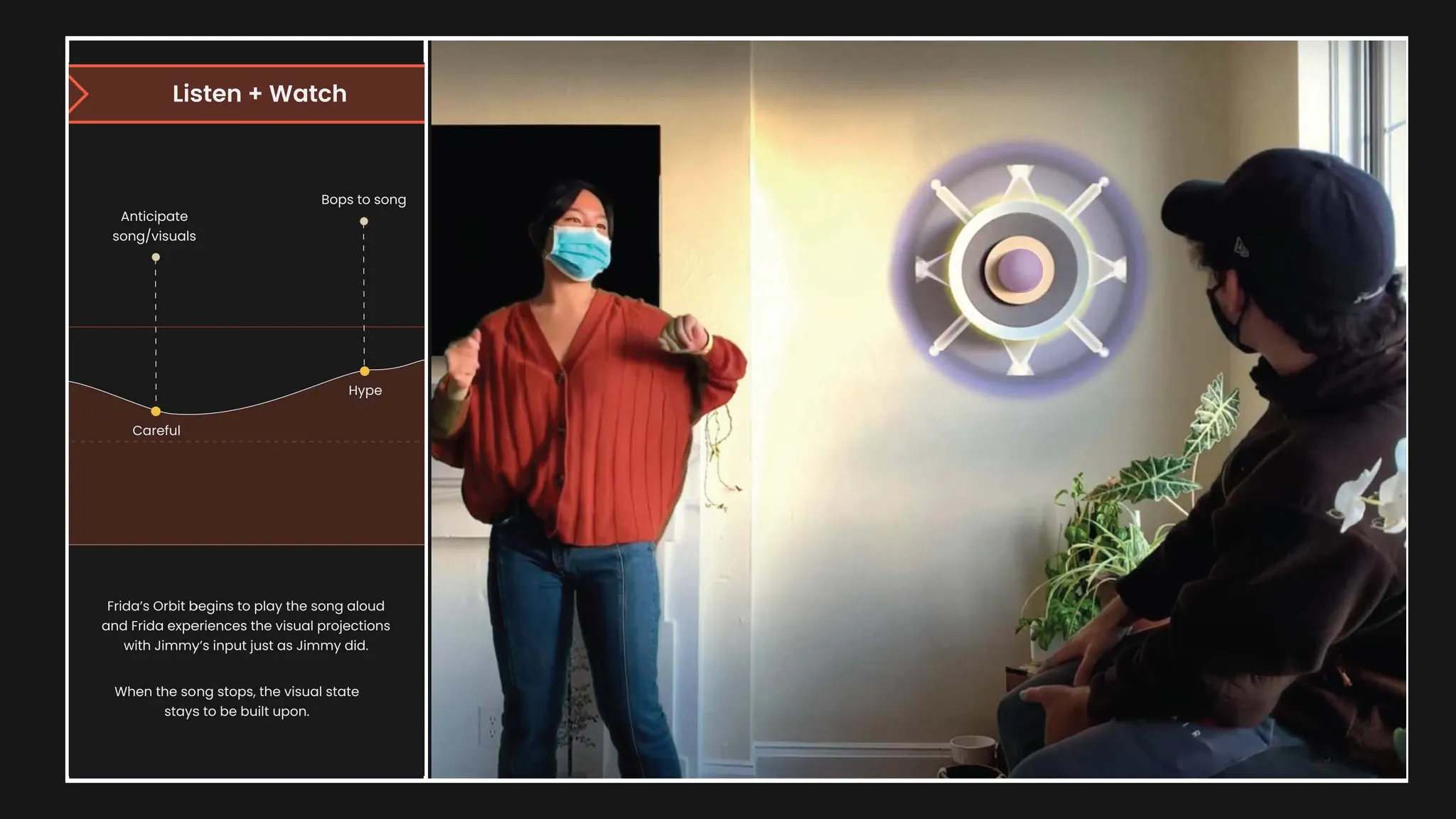
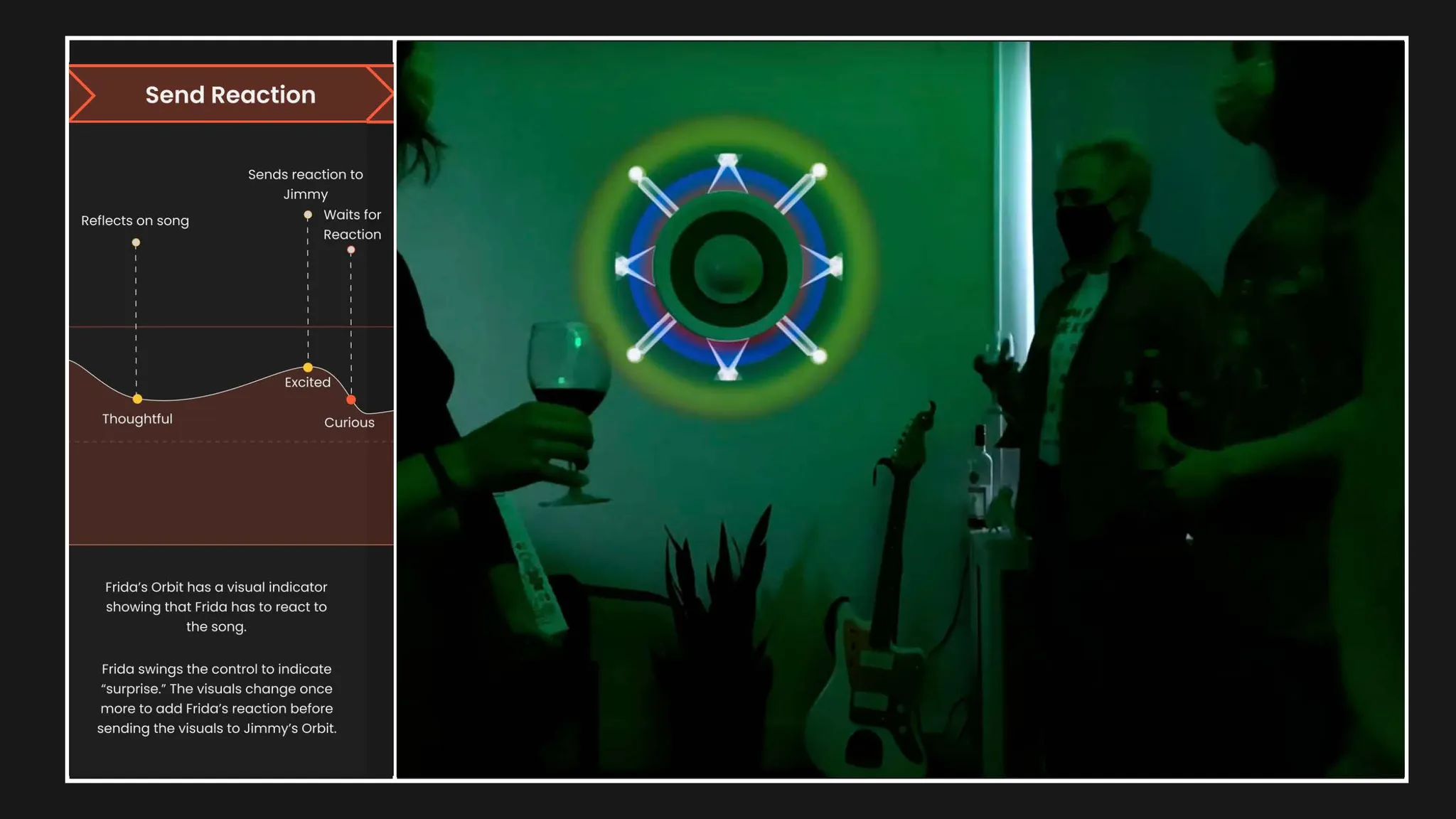
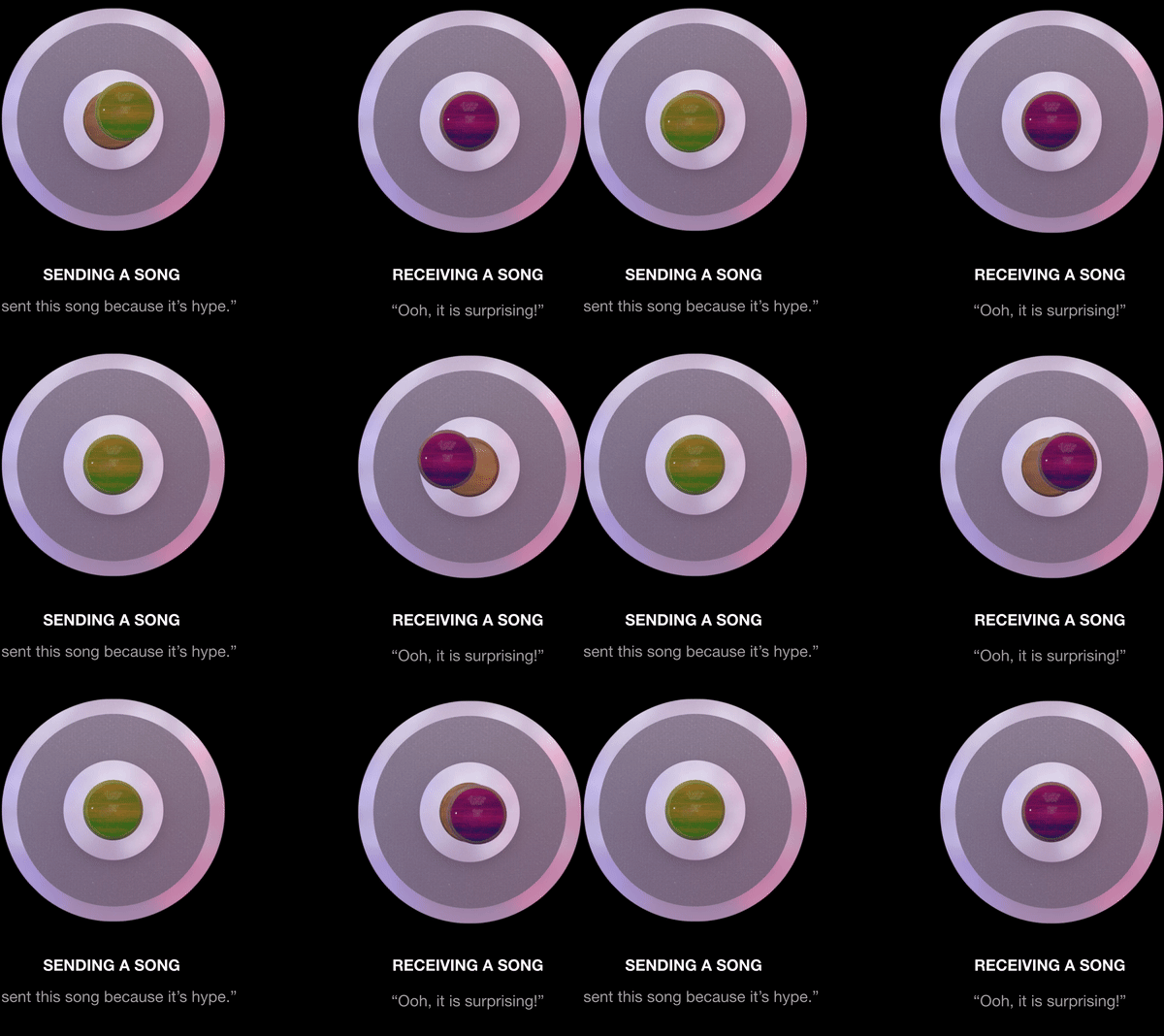
One person shares a song and the other sends a reaction. The proposed system translates each exchange into a light pattern, which becomes part of the speaker’s visual history. The journey map follows this sequence from song discovery to replay.
Experience storyboard
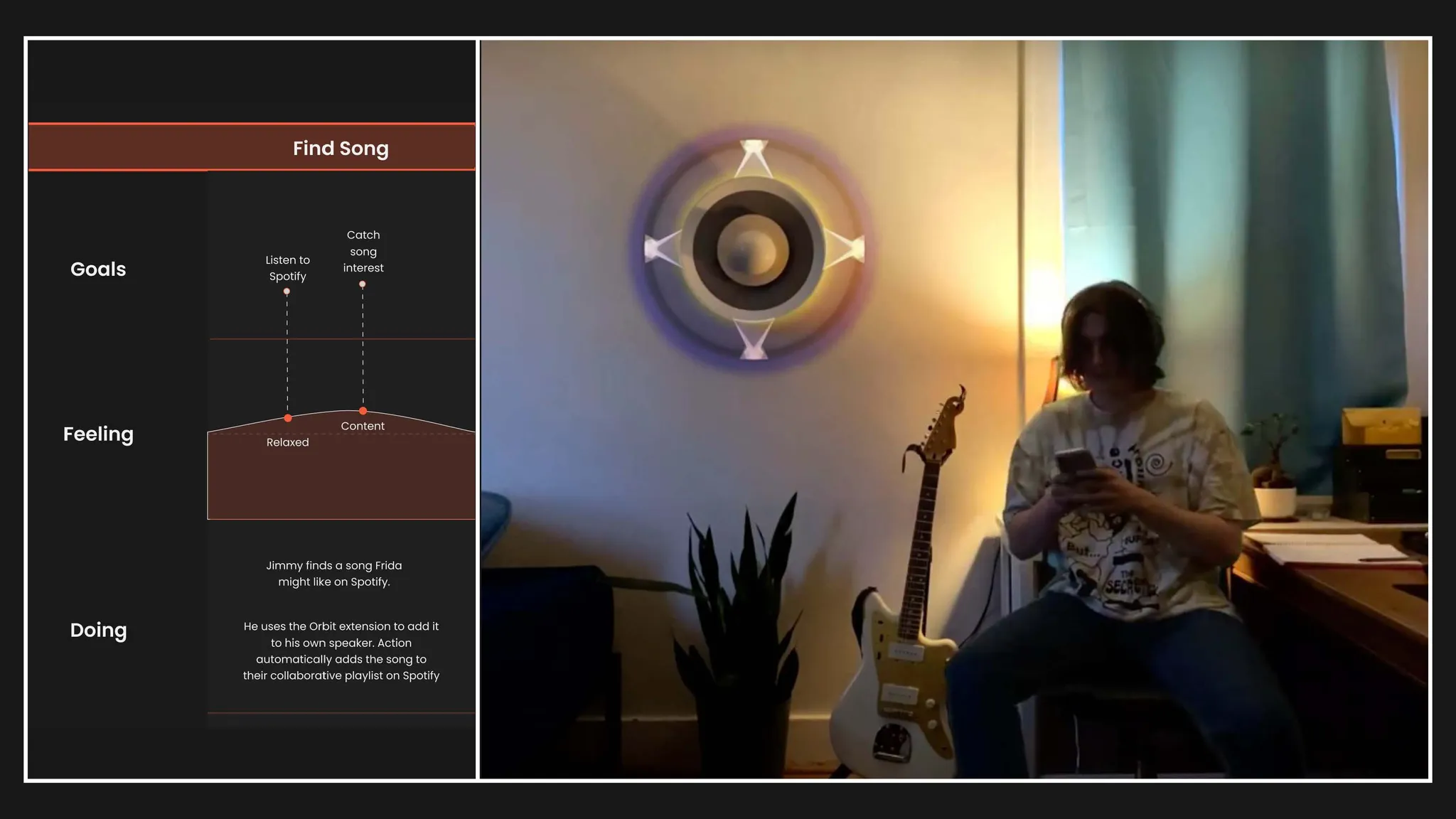
The storyboard shows key moments in the proposed experience: discovering a shared song, listening, selecting a reaction, and seeing the speaker respond.
Spotify integration
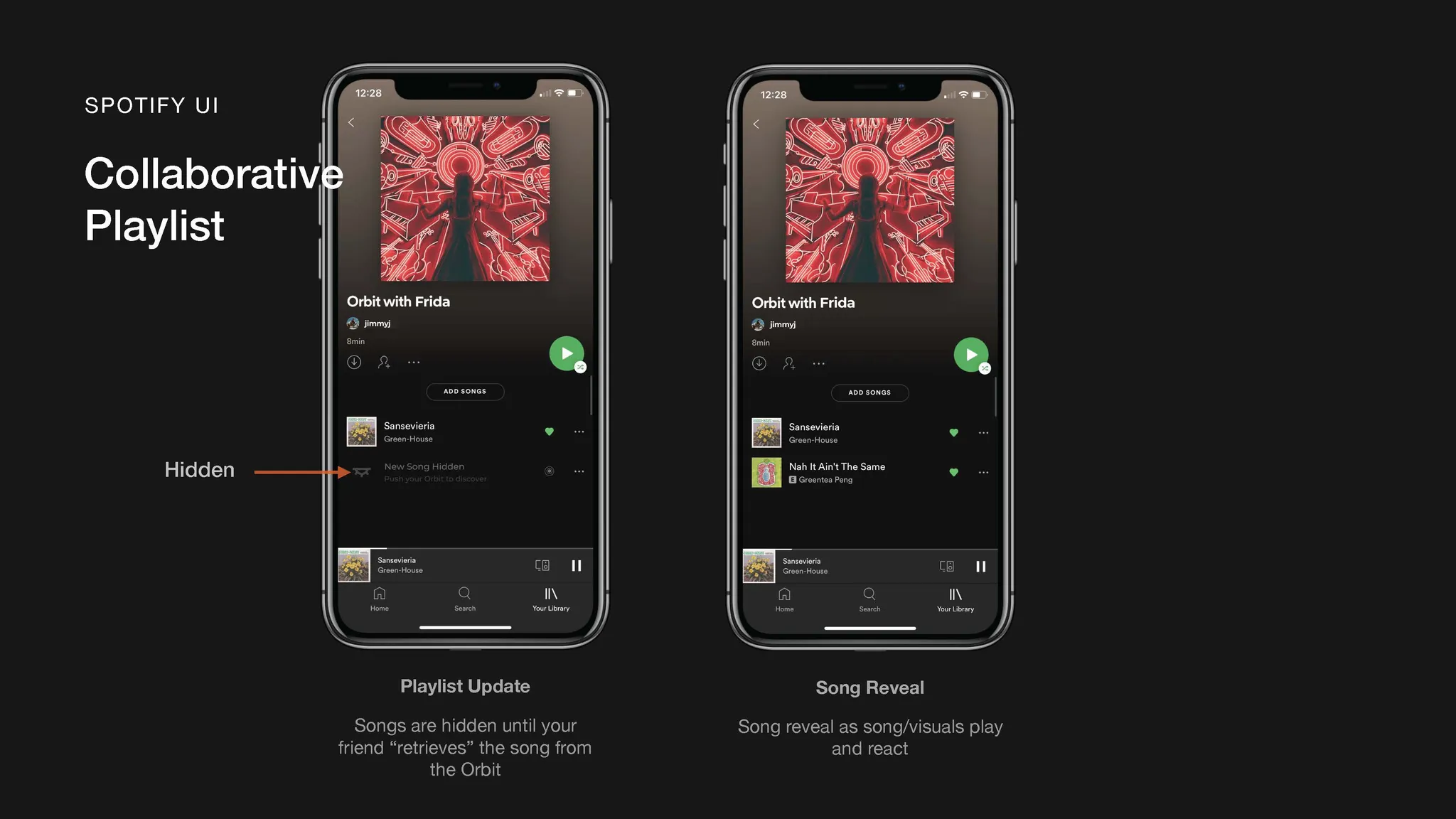
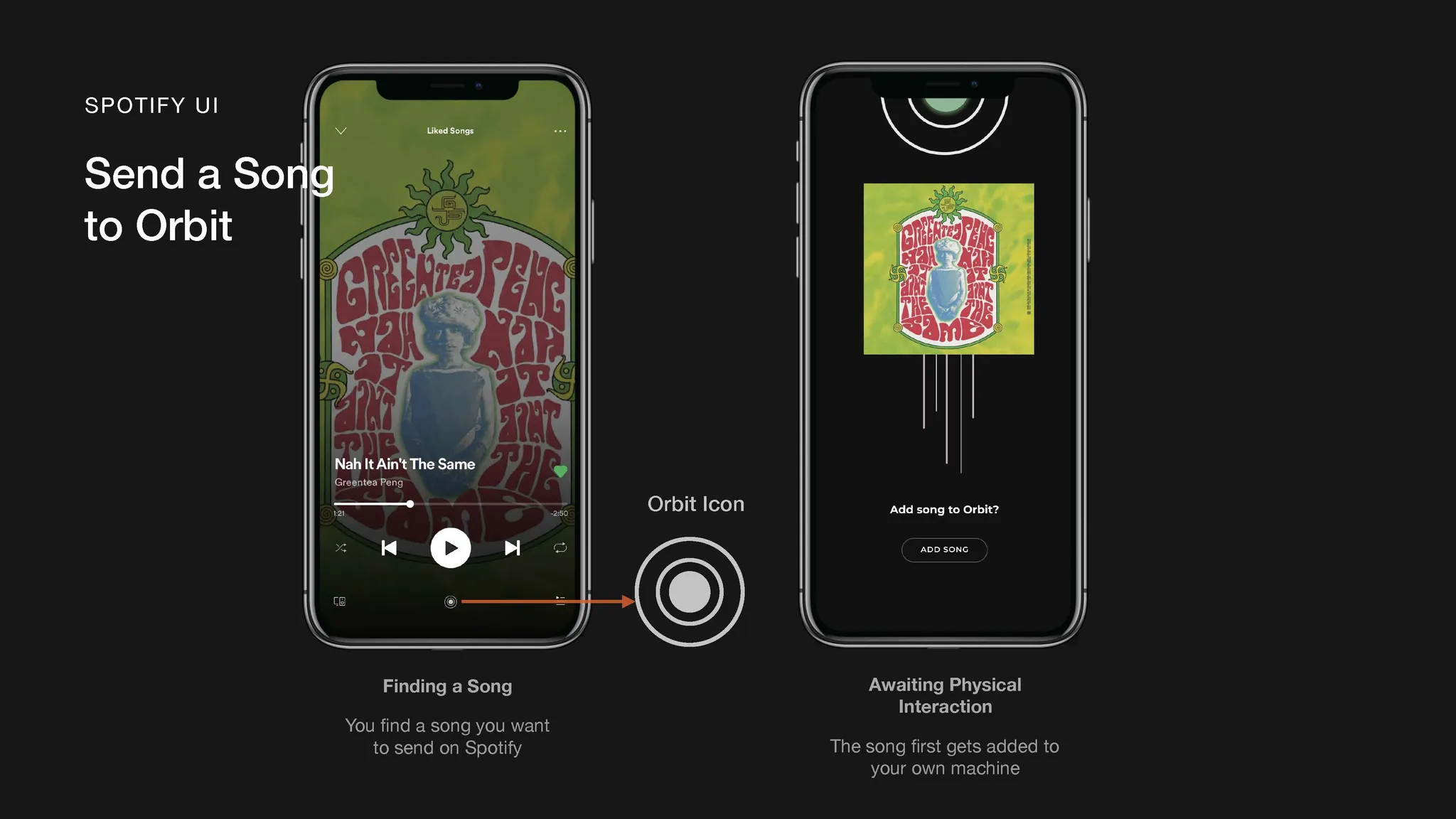
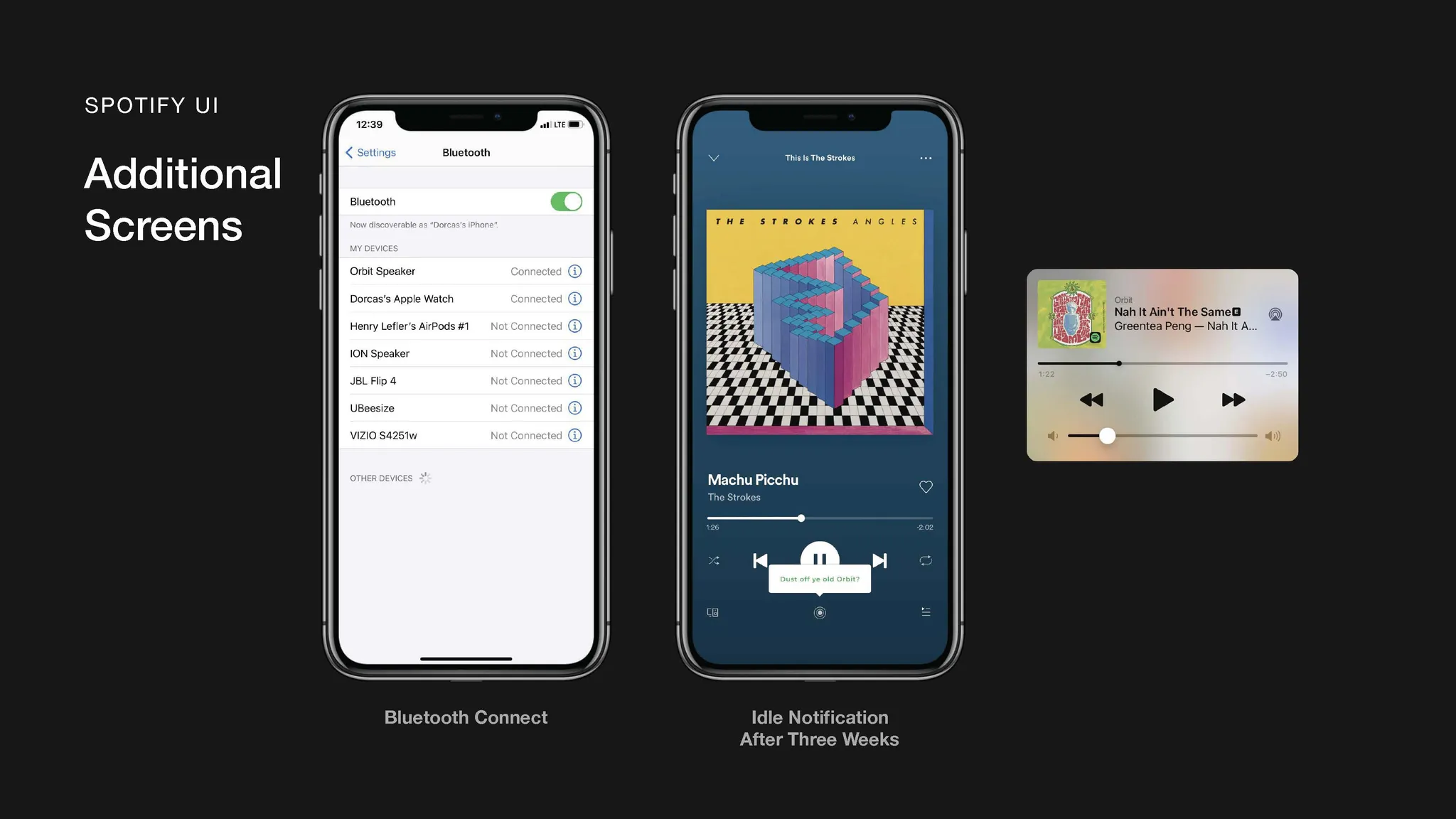
We designed the app around Spotify so people could share songs from an existing library. The companion interface shows the song, sender, and reaction, preserving the context of each exchange.
Visual System
Reaction animations
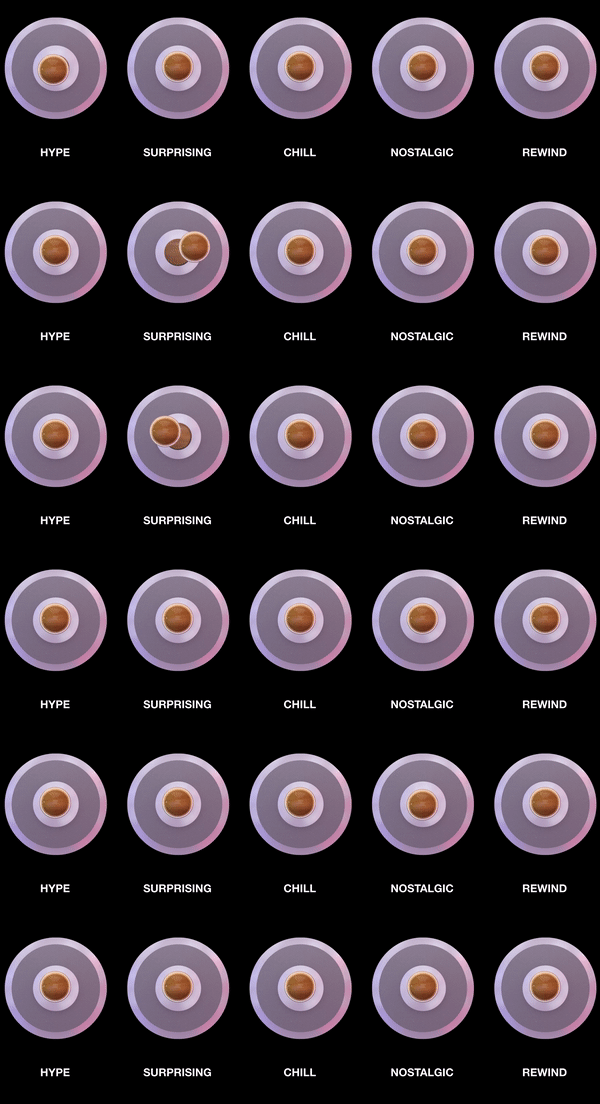
Each reaction has a corresponding light animation for the speaker.
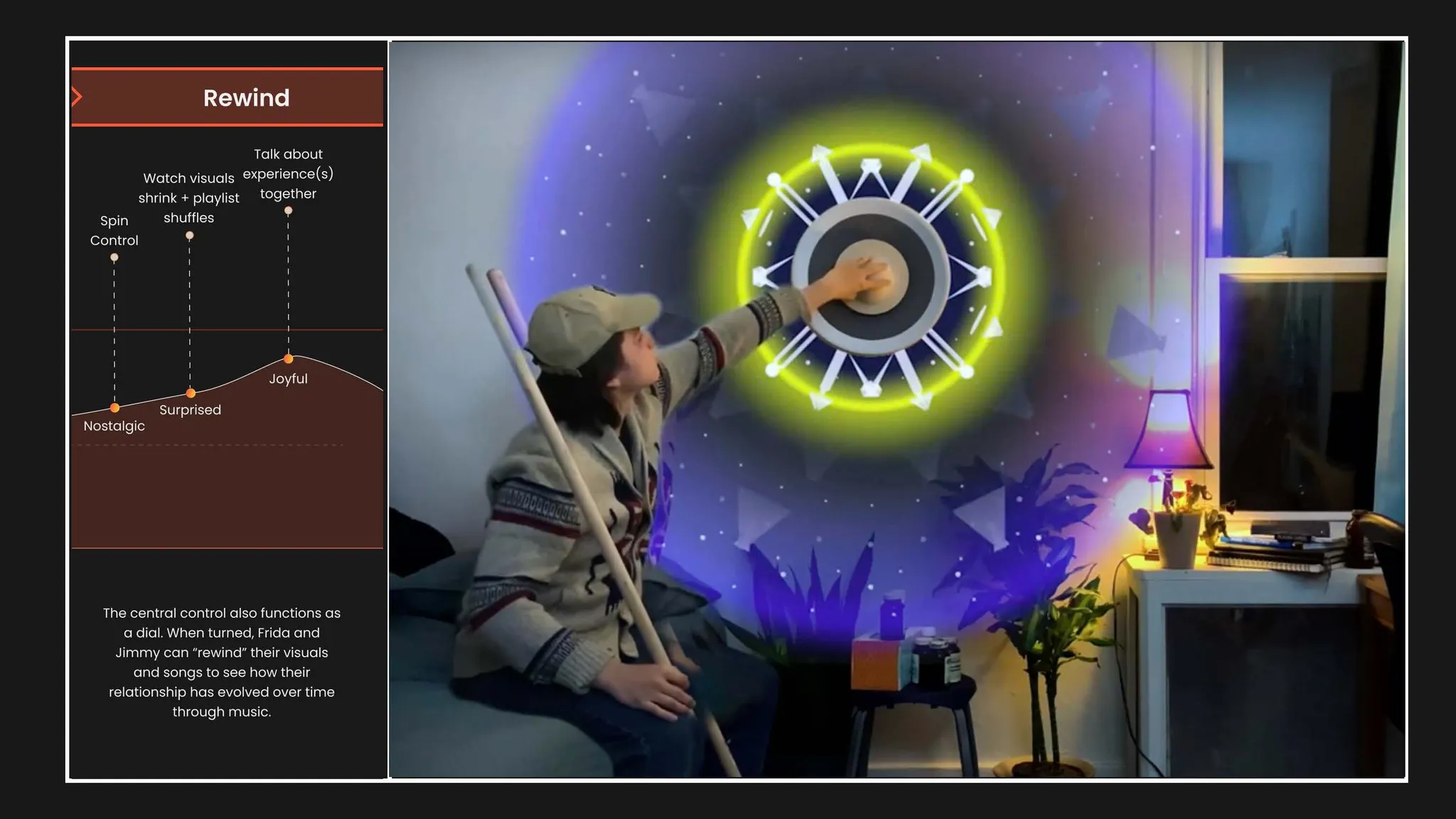
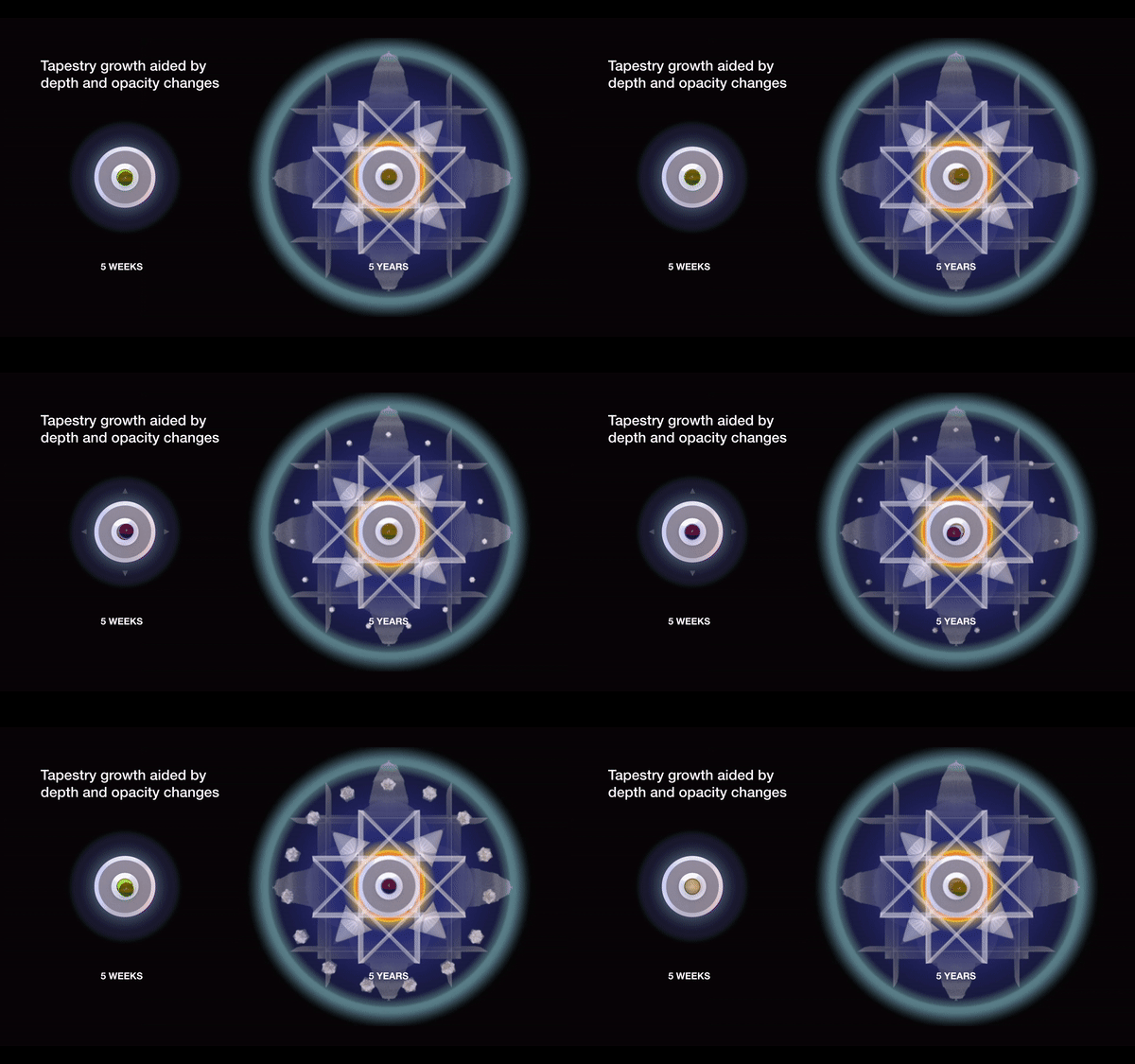
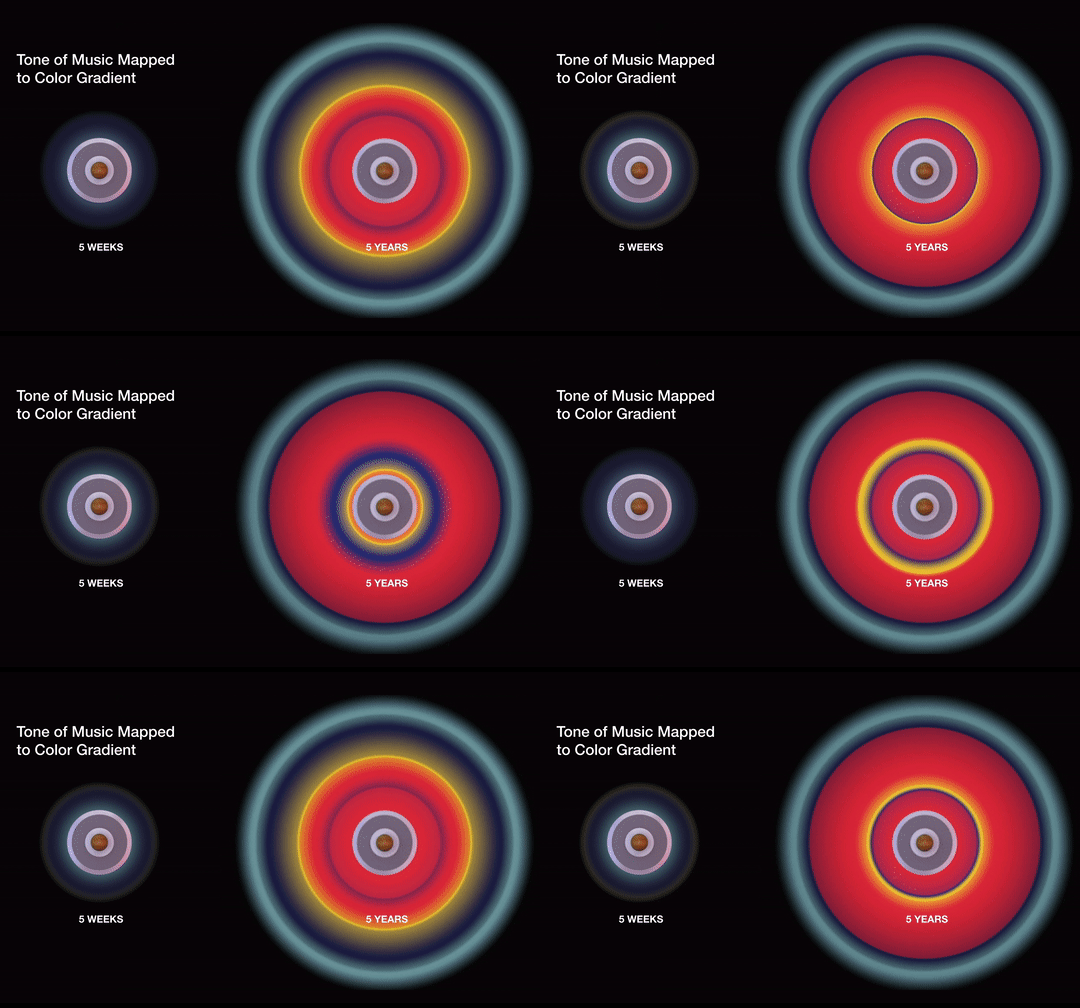
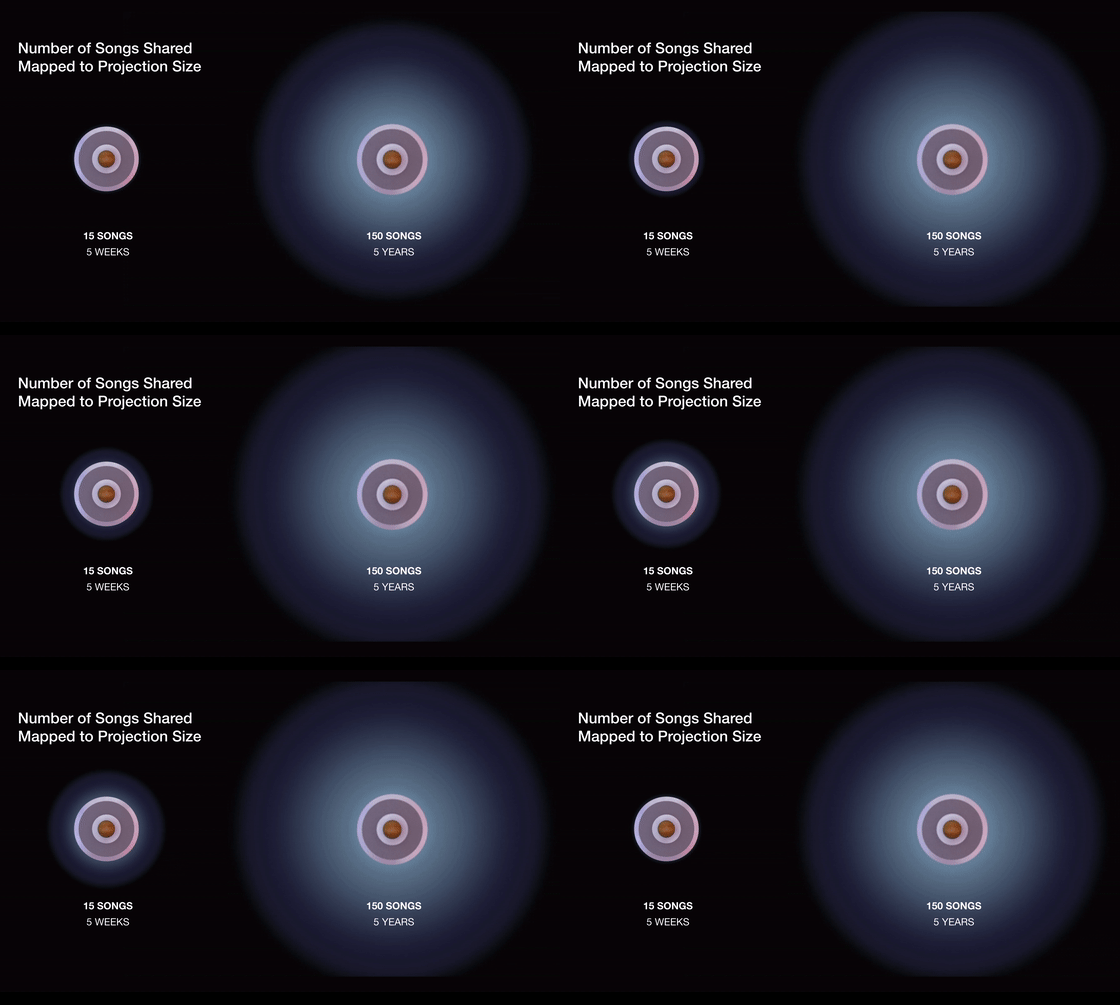
The concept combines those animations into a listening history. The motion studies explore how repeated exchanges could change the display over time.
I explored speed, color temperature, and movement across five states, including a rewind mode for revisiting earlier exchanges.
Systems Diagram
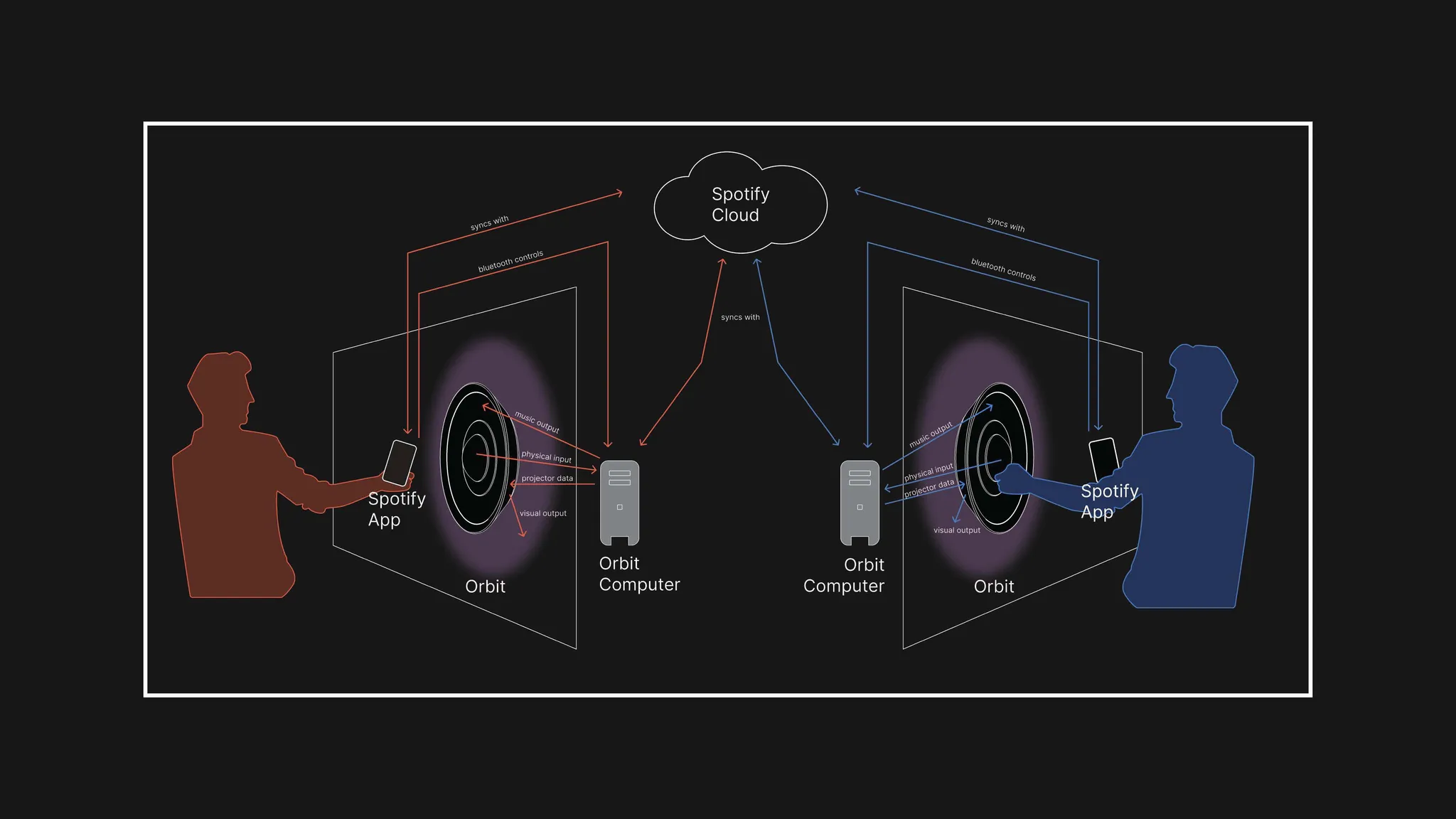
The diagram maps a proposed connection between two speakers and the companion app. A reaction would trigger a light animation on both speakers, giving each person a visible response to the shared song.
Physical Form
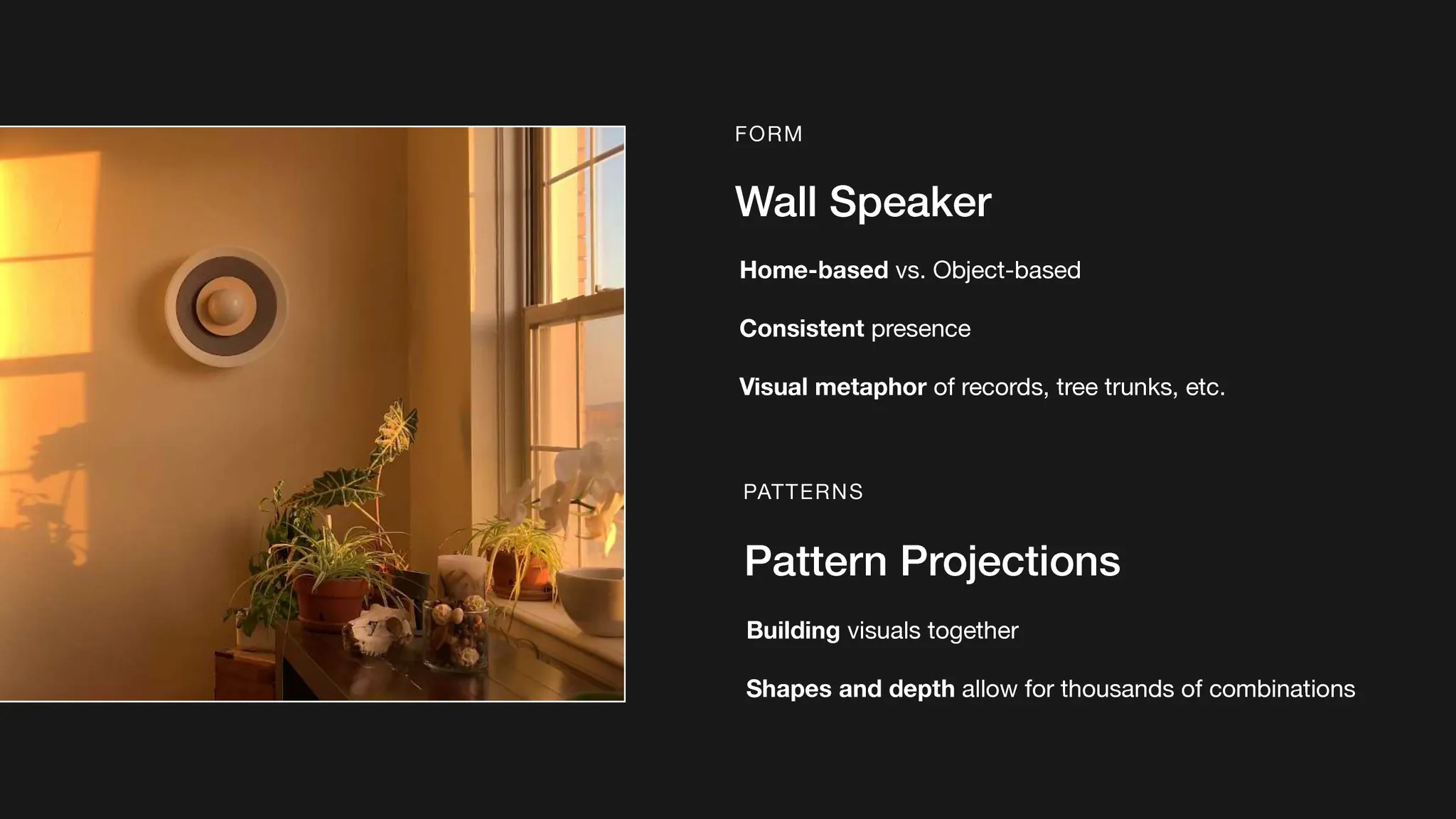
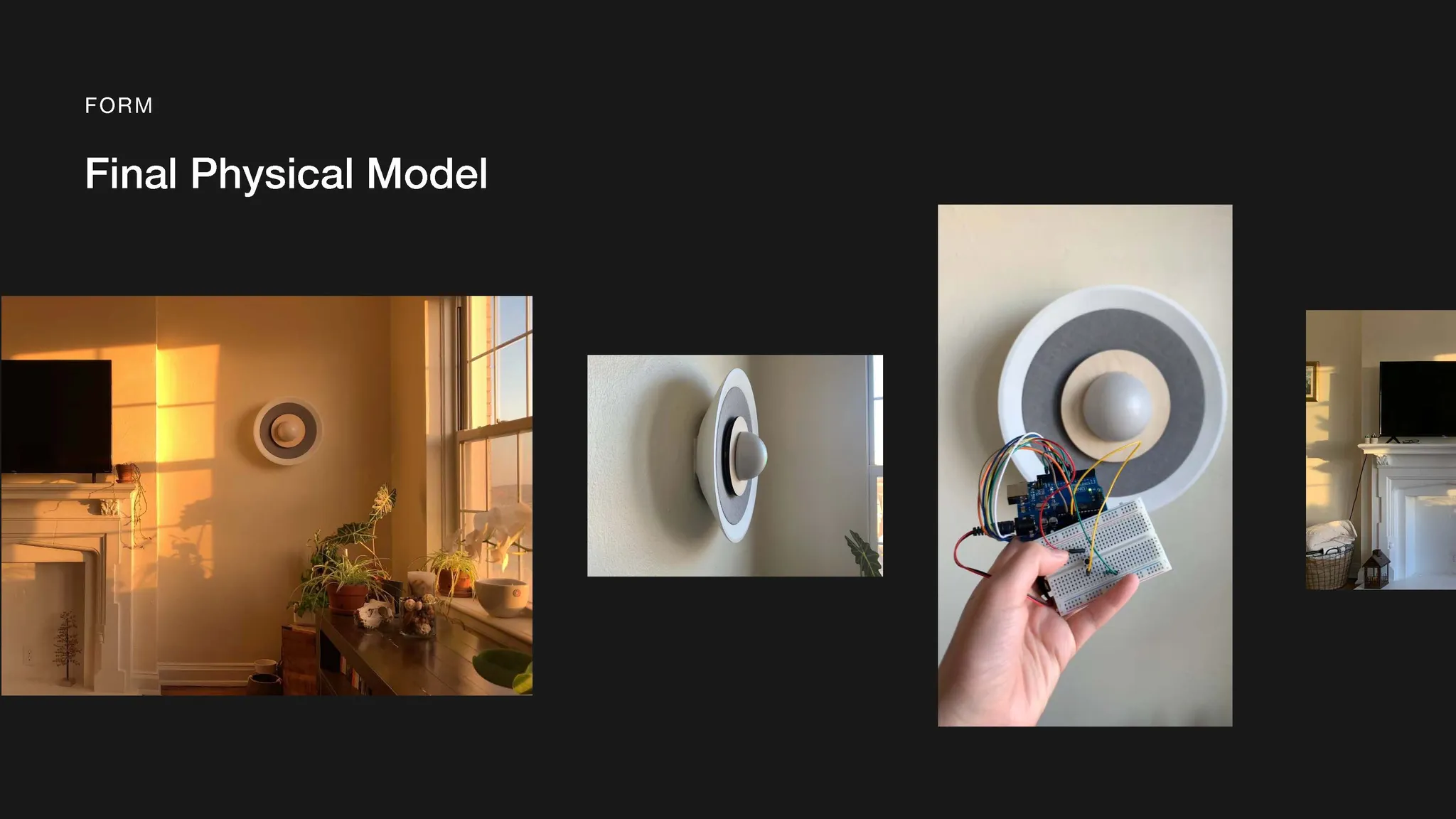
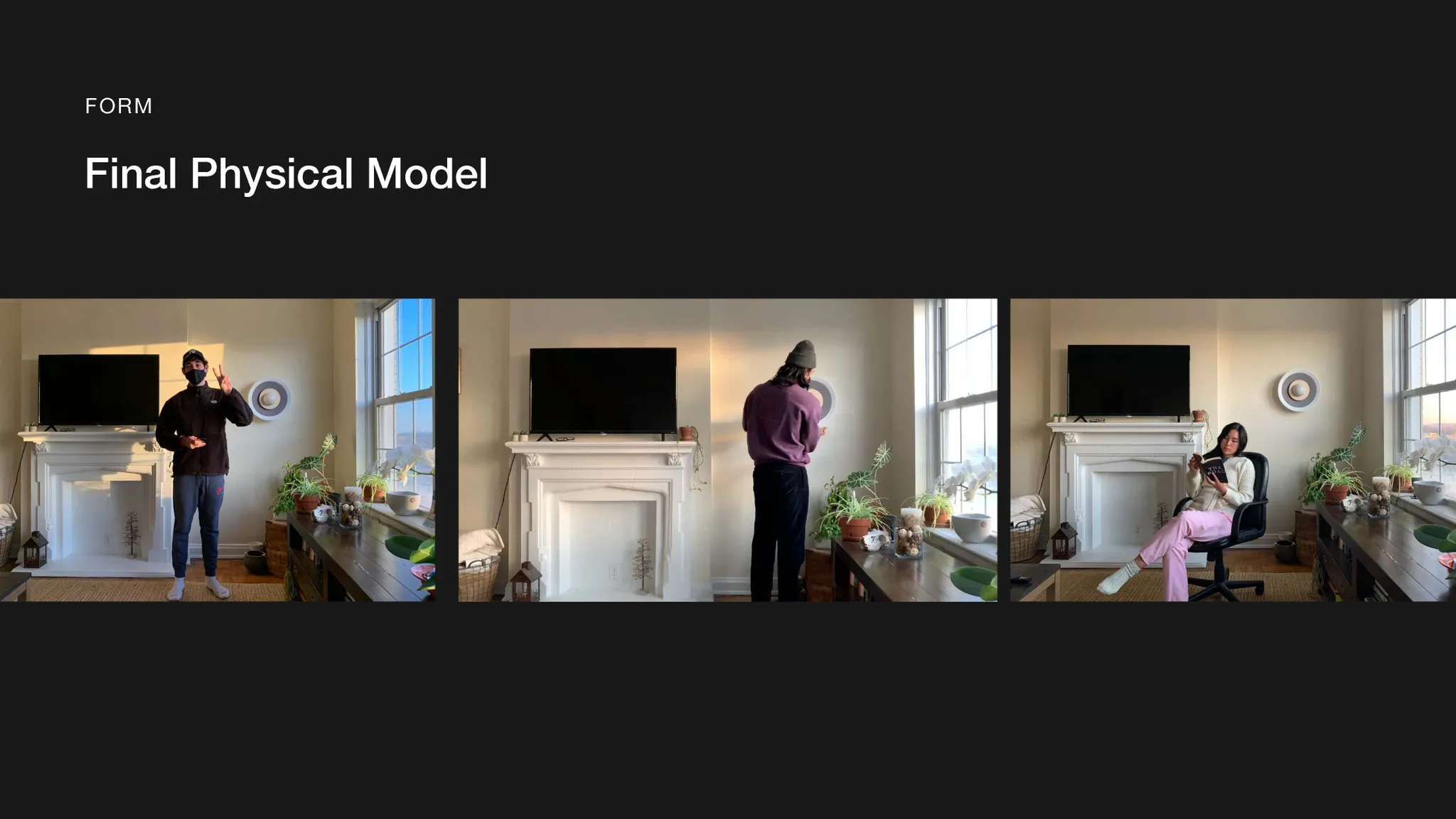
We prototyped the wall-mounted form in Tinkercad and SolidWorks. The shell sits flush against the wall, and its material diffuses an Arduino-controlled LED array into a continuous glow. This let us explore the relationship between the physical form and the light animations.
Next Project
HP
Sustainability Experience
A physical pop-up experience using animatronic plants and sensor-driven interaction to connect HP's sustainability work to its brand identity.
View project →