Orbit: Growing Together
- Organization
- Carnegie Mellon University
Interaction Design - Role
- Interaction design
Concept development
Physical prototyping - Collaborators
- Dorcas Lin
Franklin Guttman - Duration
- 2021
Orbit is a wall-speaker concept for two people who live apart. They share songs and send reactions, which appear as light patterns on the speaker. The proposed experience accumulates those exchanges into a visual listening history.
Our team explored how sharing music could support connection between people who no longer see each other regularly. We designed a physical object that could keep those exchanges visible in the home.
I contributed interaction design, concept development, and physical prototyping alongside Dorcas Lin and Franklin Guttman. The project combined app screens, motion studies, and an Arduino-based speaker prototype to explore the experience.
How it works
Sharing and response
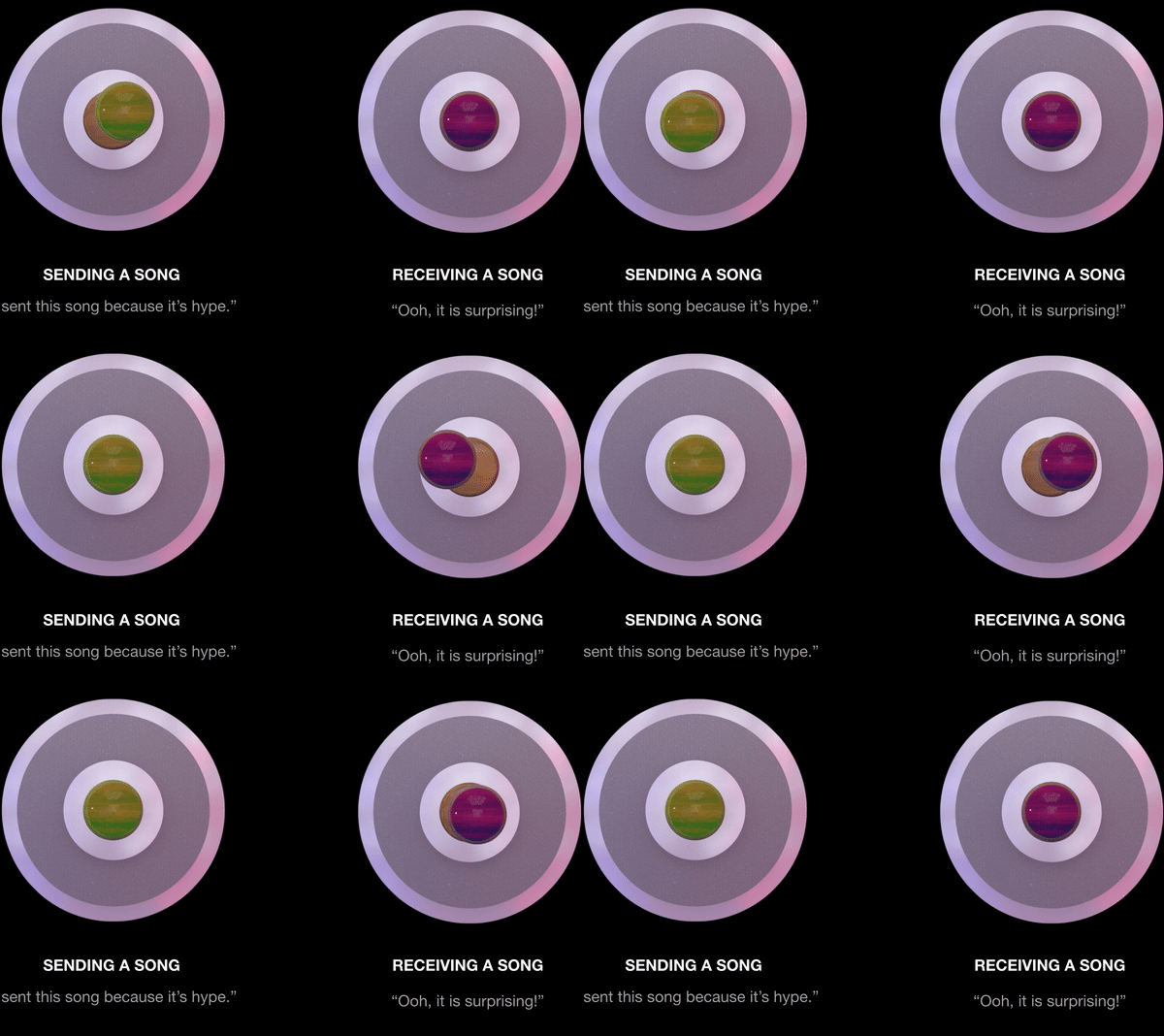
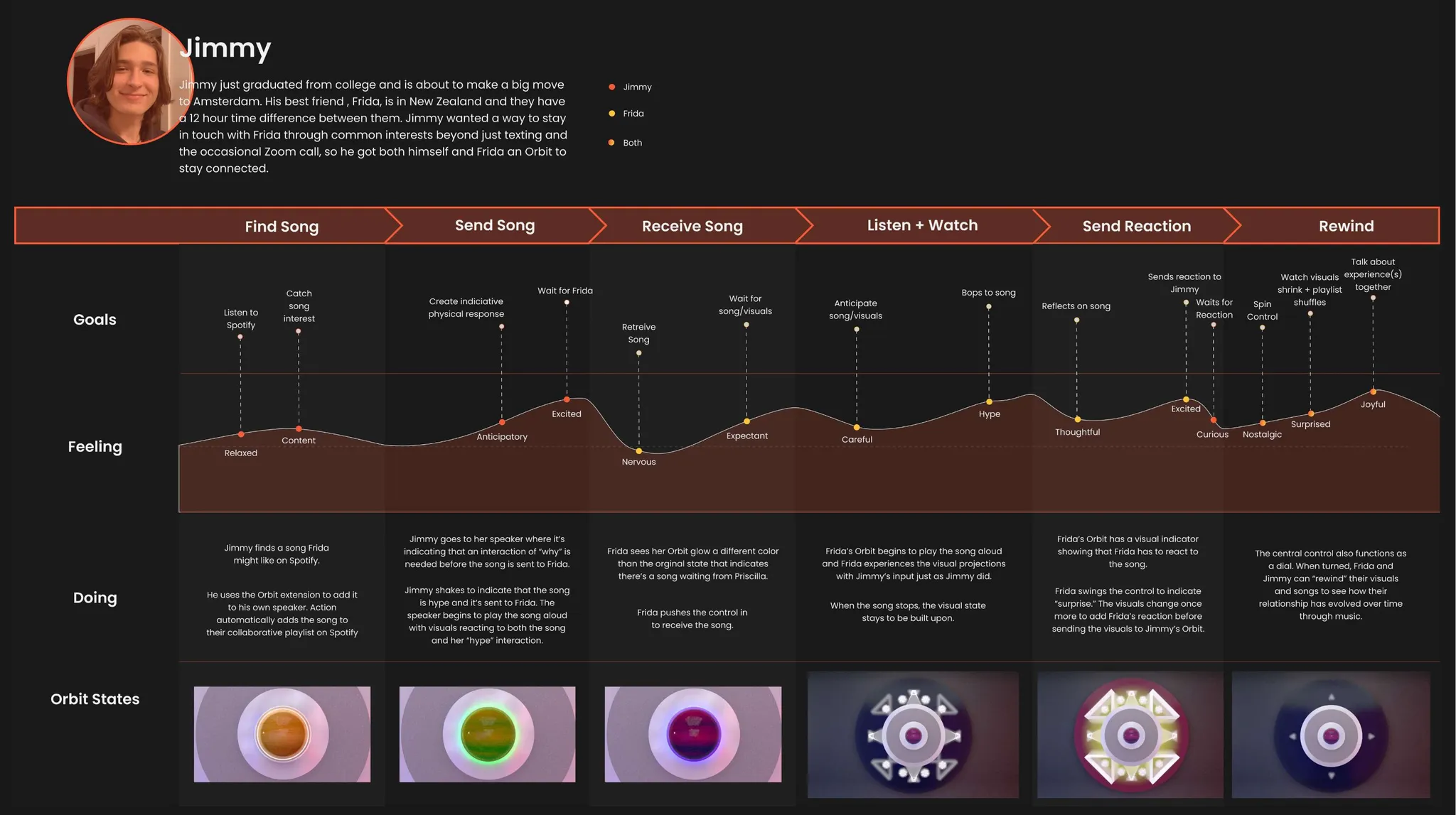
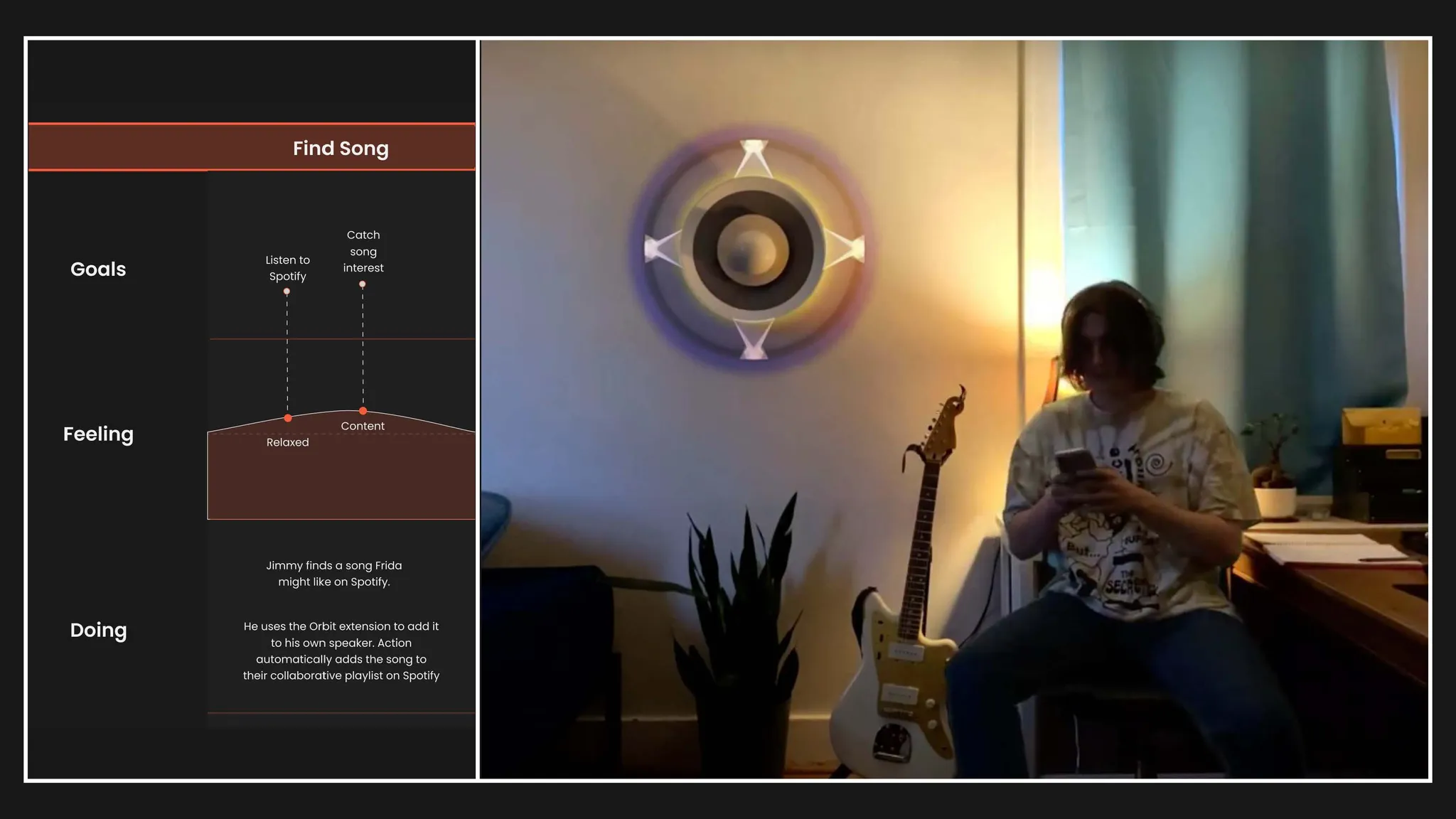
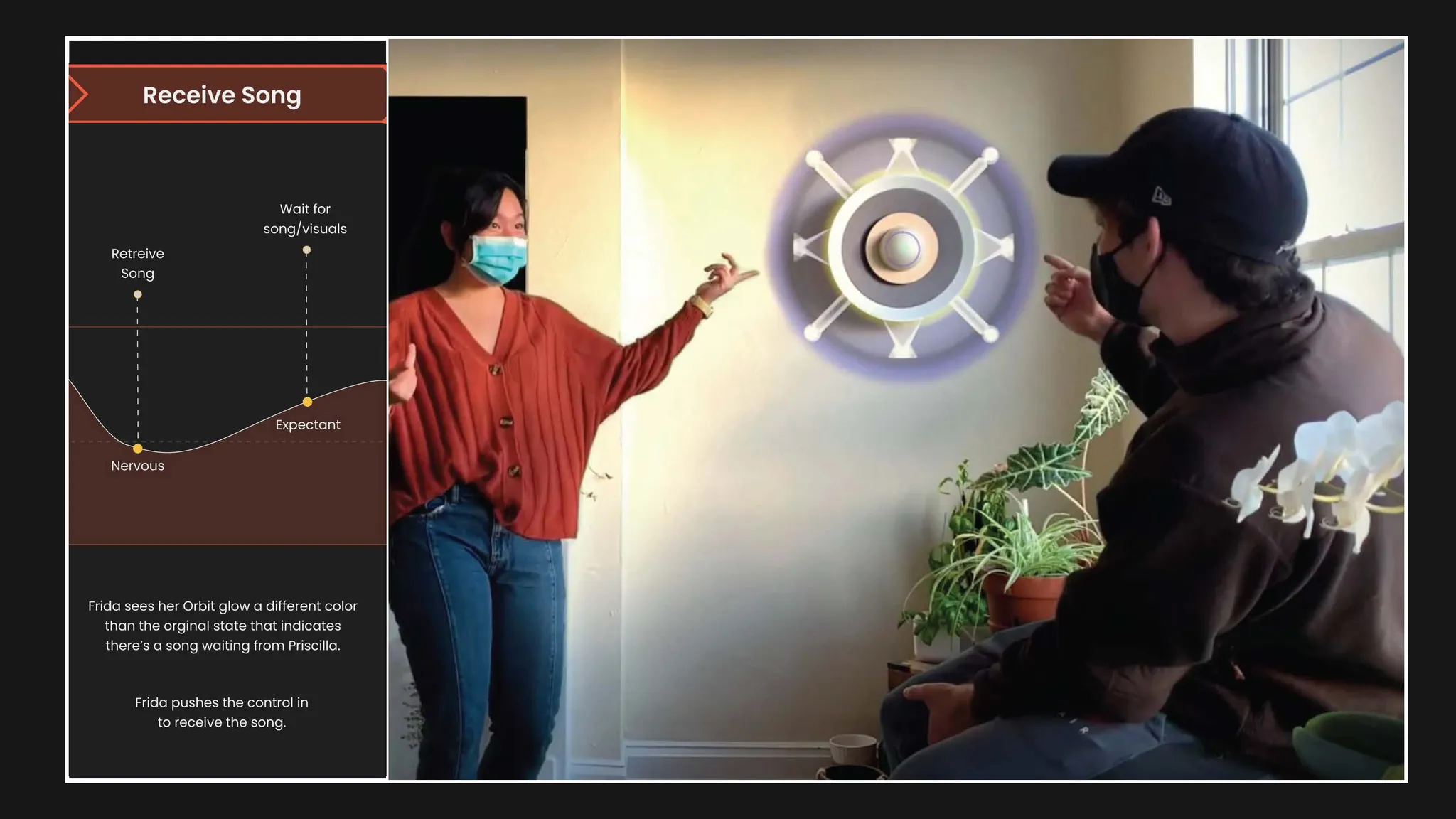
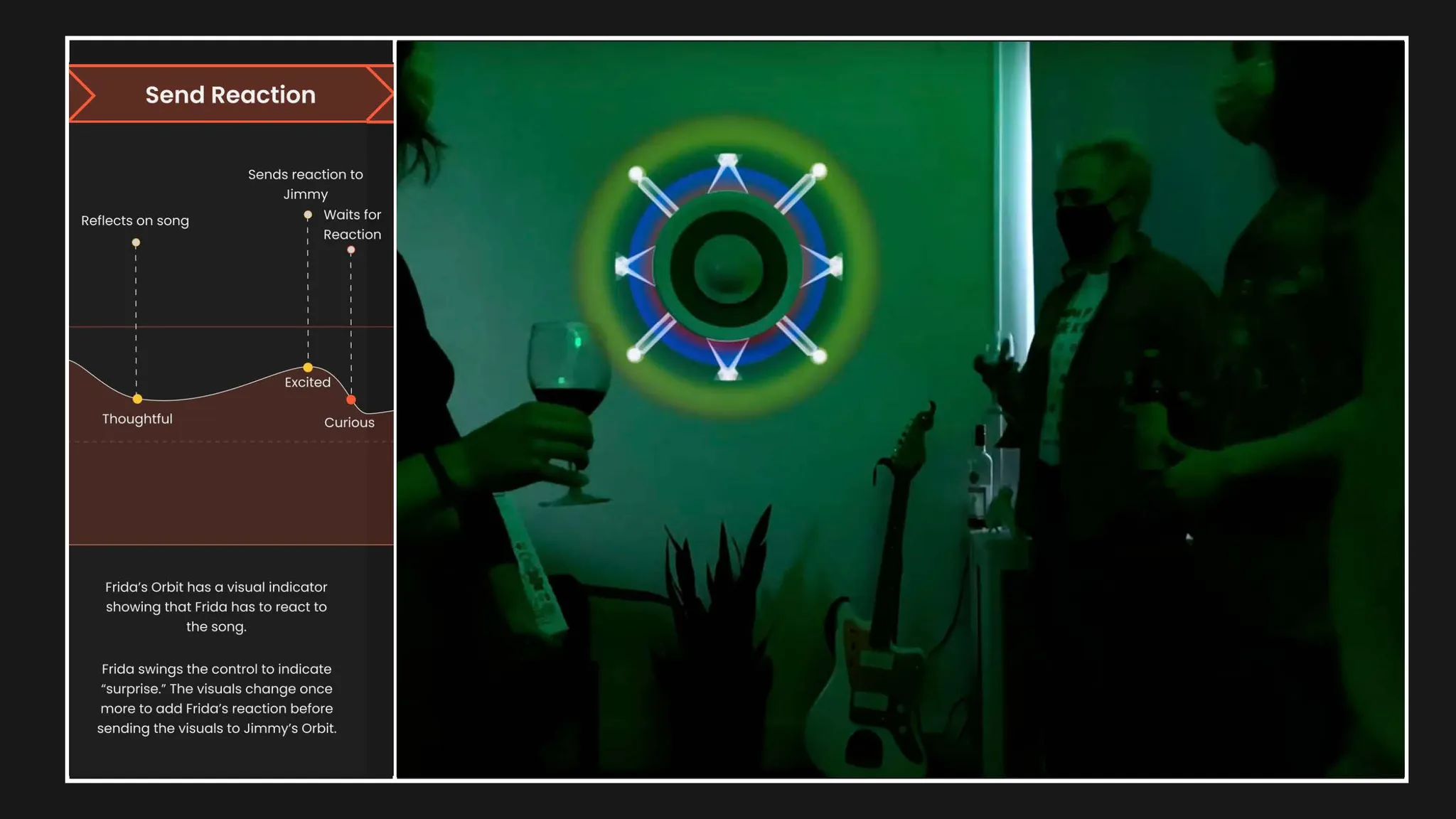
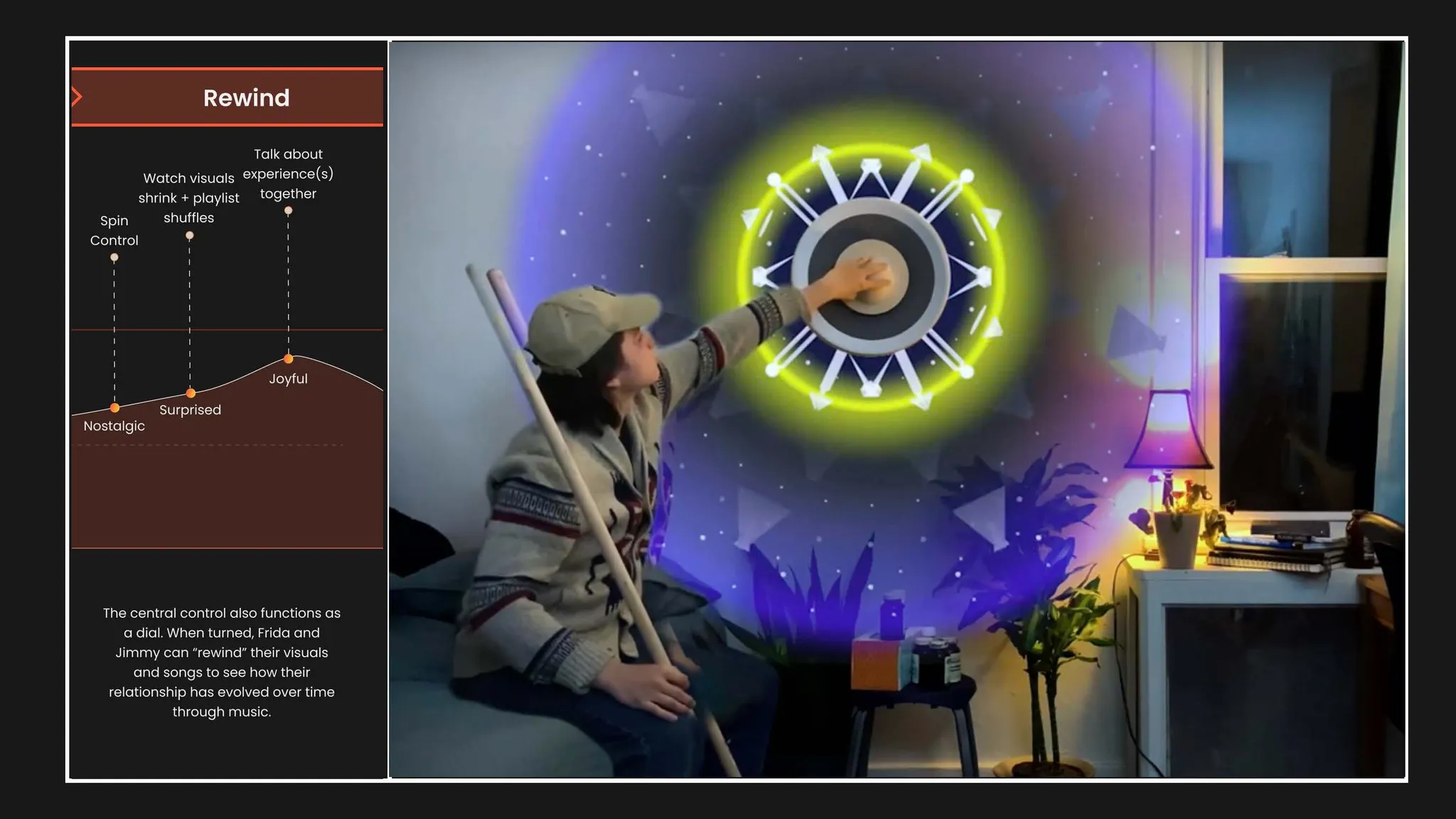
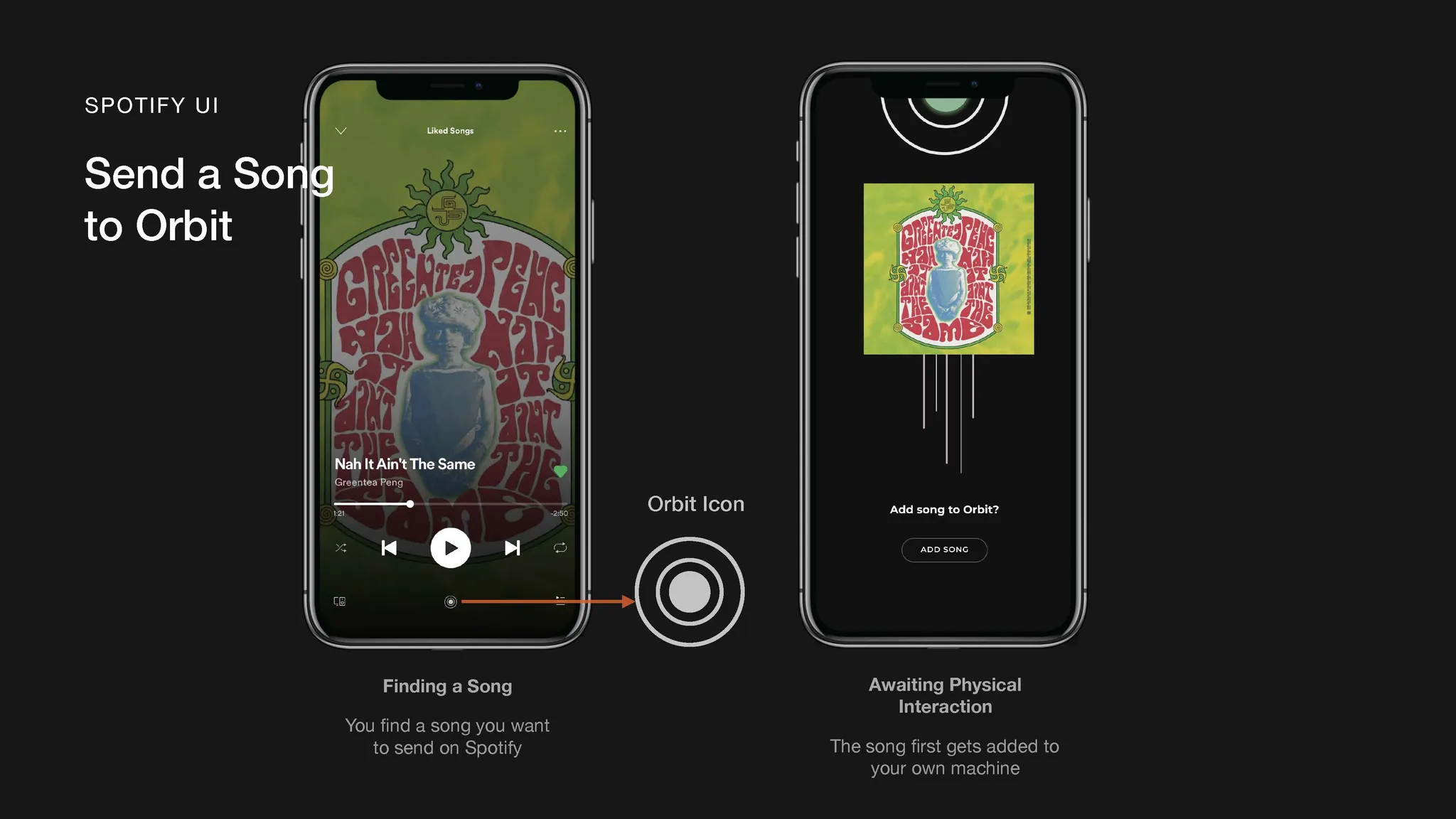
The experience follows a shared song from discovery to listening, reaction, and later replay. Each exchange contributes a light pattern to the speaker’s visual history.
Spotify integration
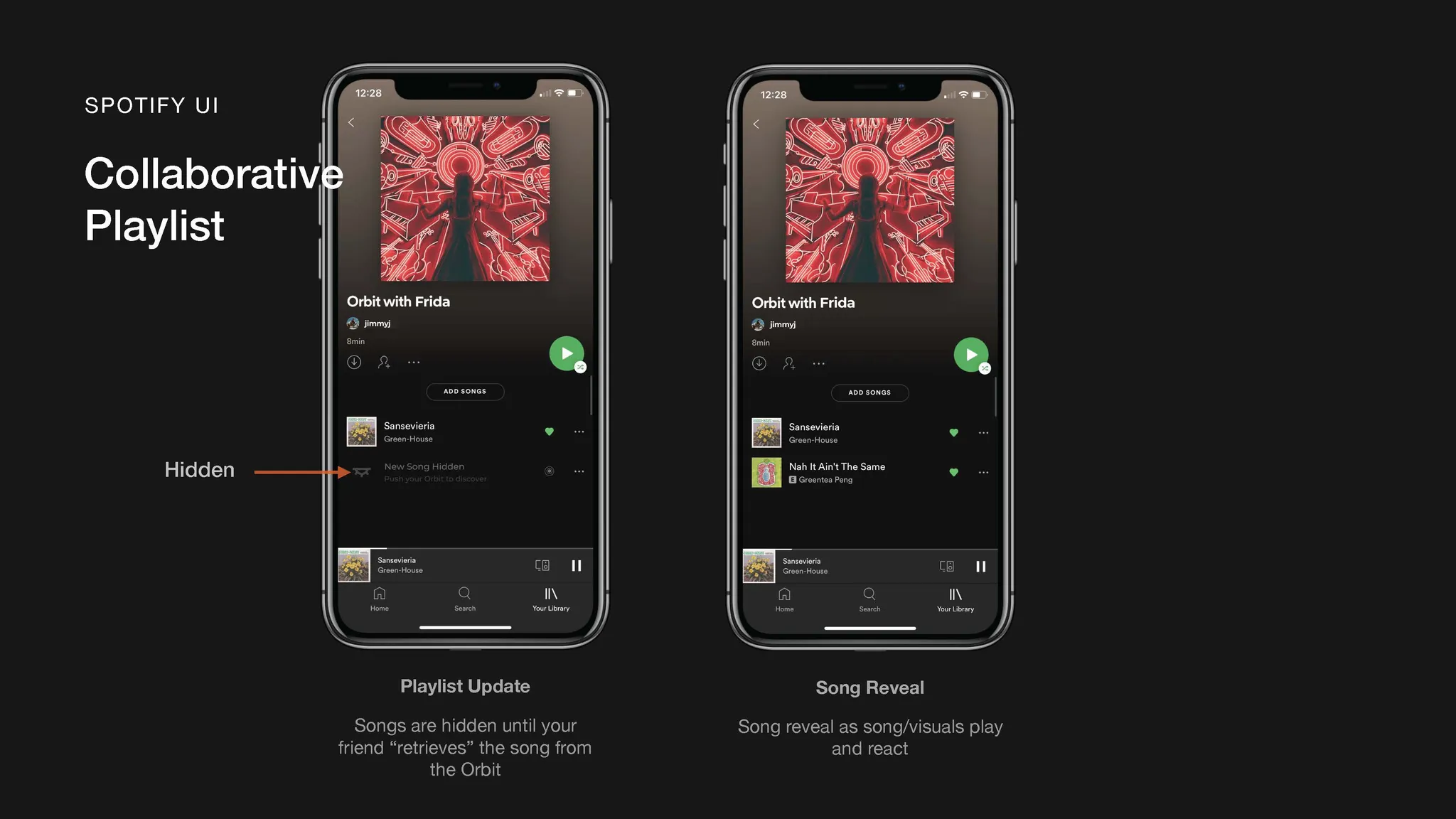
We designed the sharing flow around an existing Spotify library. The companion app shows the sender, shared song, and response, keeping the exchange connected to its musical context.
The work
- The interaction model
- Defined the share-and-react interaction, using reactions to give each song exchange a visual response.
- Emotional language
- Animated the reaction and rewind states, exploring how speed, color, and movement could distinguish them.
- Physical form
- Modeled the wall-mounted speaker in Tinkercad and SolidWorks, exploring how it could function as an object displayed in the home.
- Electronics
- Prototyped the LED lighting with Arduino and selected an enclosure material to diffuse the individual light sources.
- Companion interface
- Designed the companion app and Spotify sharing flow, including song context, sender information, and reactions.
- System architecture
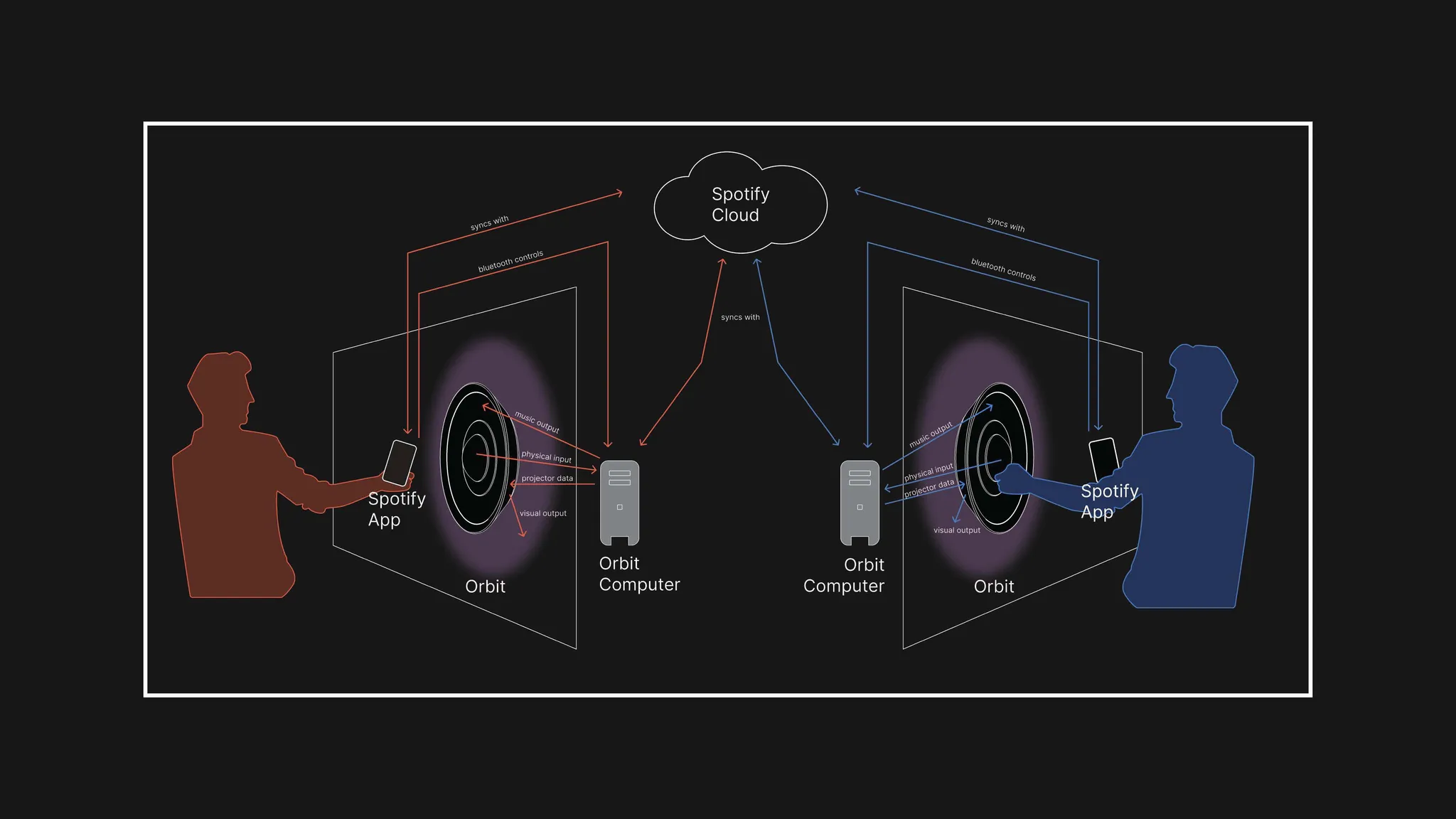
- Mapped the proposed flow of song and reaction data between the app and two speakers.
The object
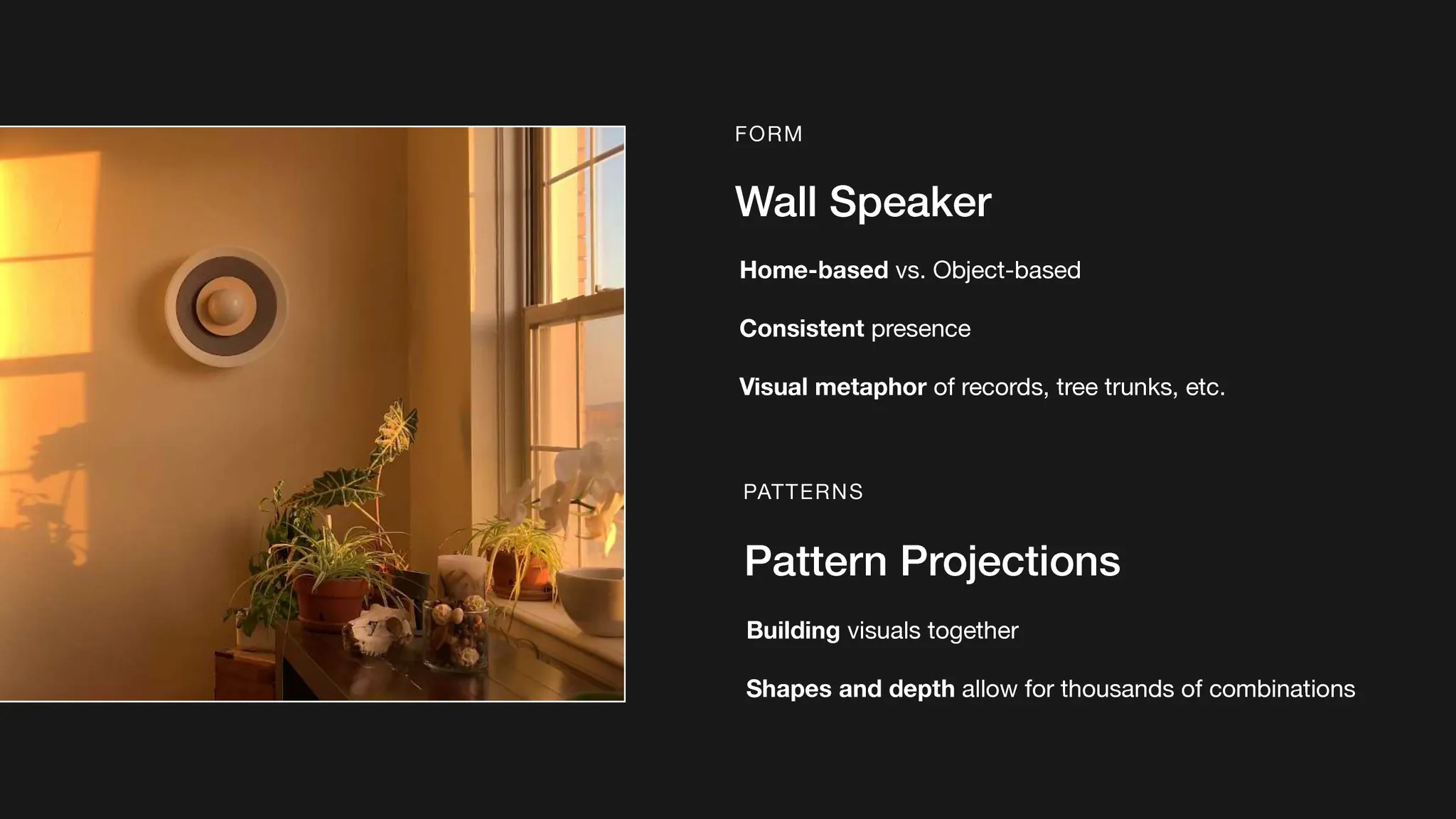
Wall-mounted form
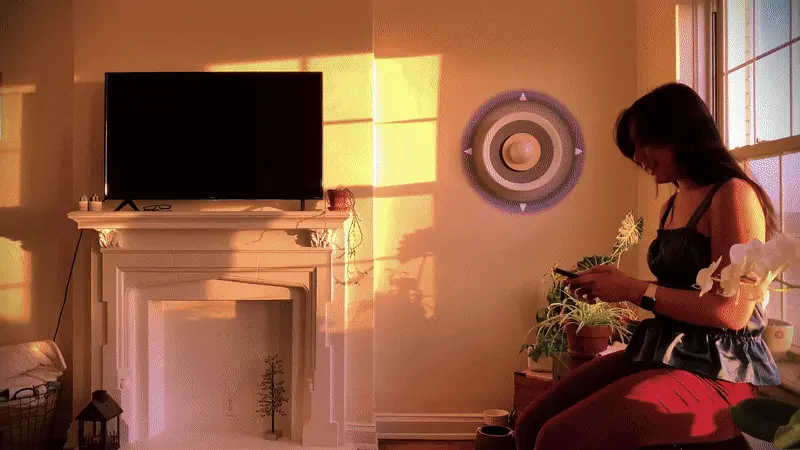
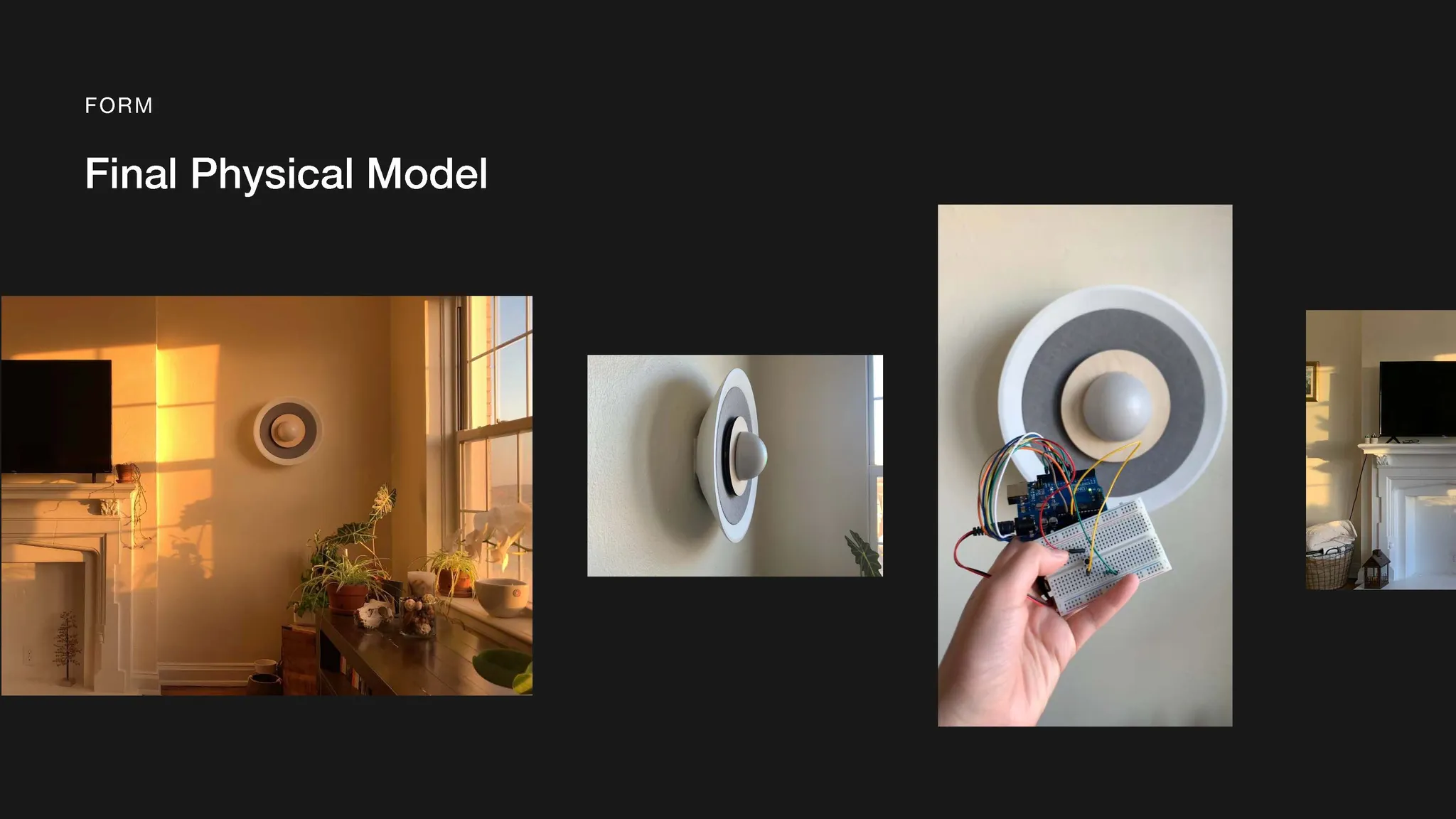
We designed the shell to sit flush against a wall, keeping the shared listening history visible as part of the room.
An Arduino controls the prototype’s LED array. The enclosure diffuses individual LEDs into a continuous glow across the face.
Connected system
The system diagram proposes sending a reaction through the app to both speakers. Synchronized light patterns were intended to give both people a visible response to the same exchange.
Five states
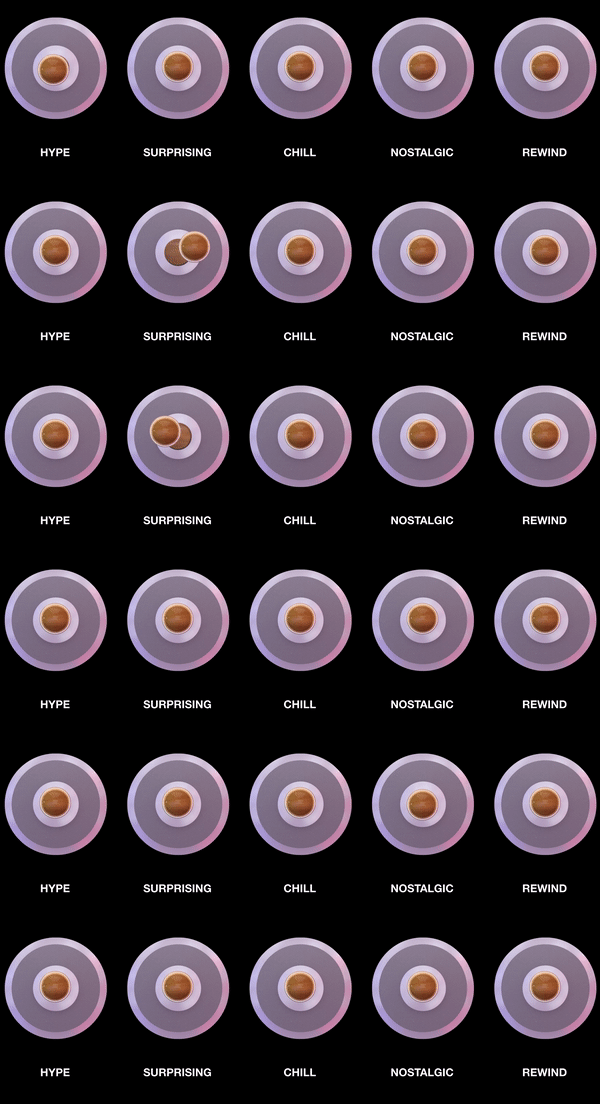
The visual system includes hype, surprising, chill, nostalgic, rewind. I varied animation speed, color temperature, and movement to explore how the states could be distinguished at a distance.
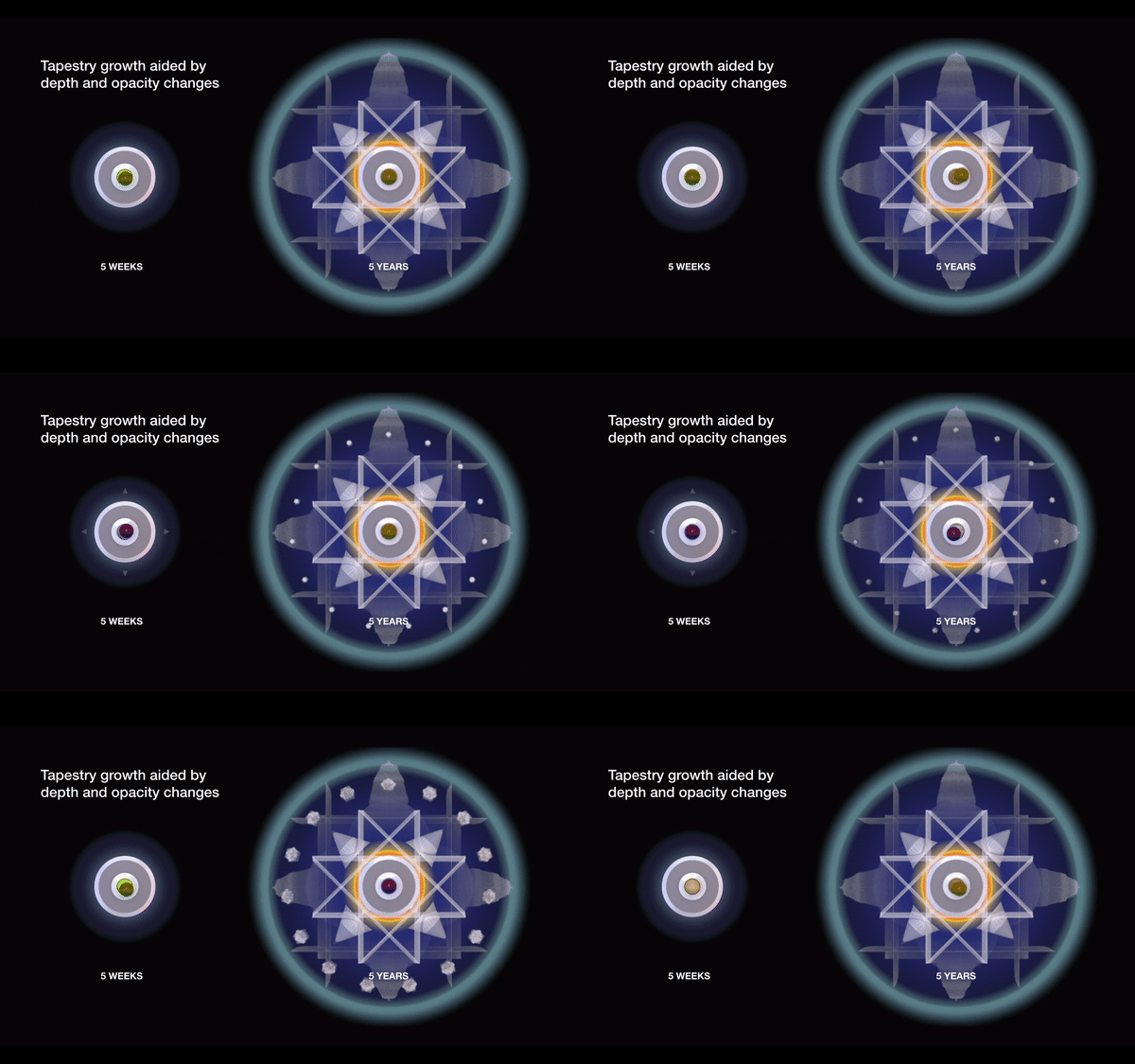
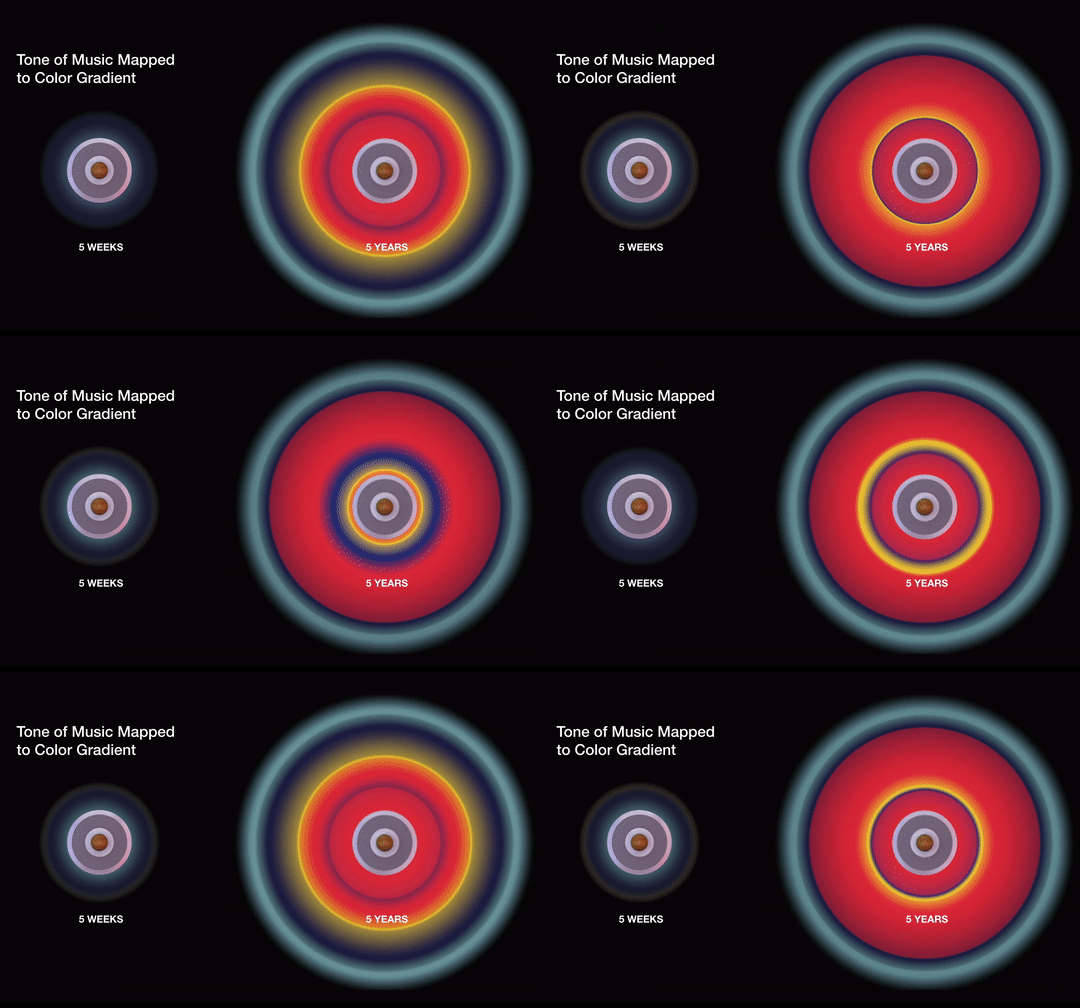
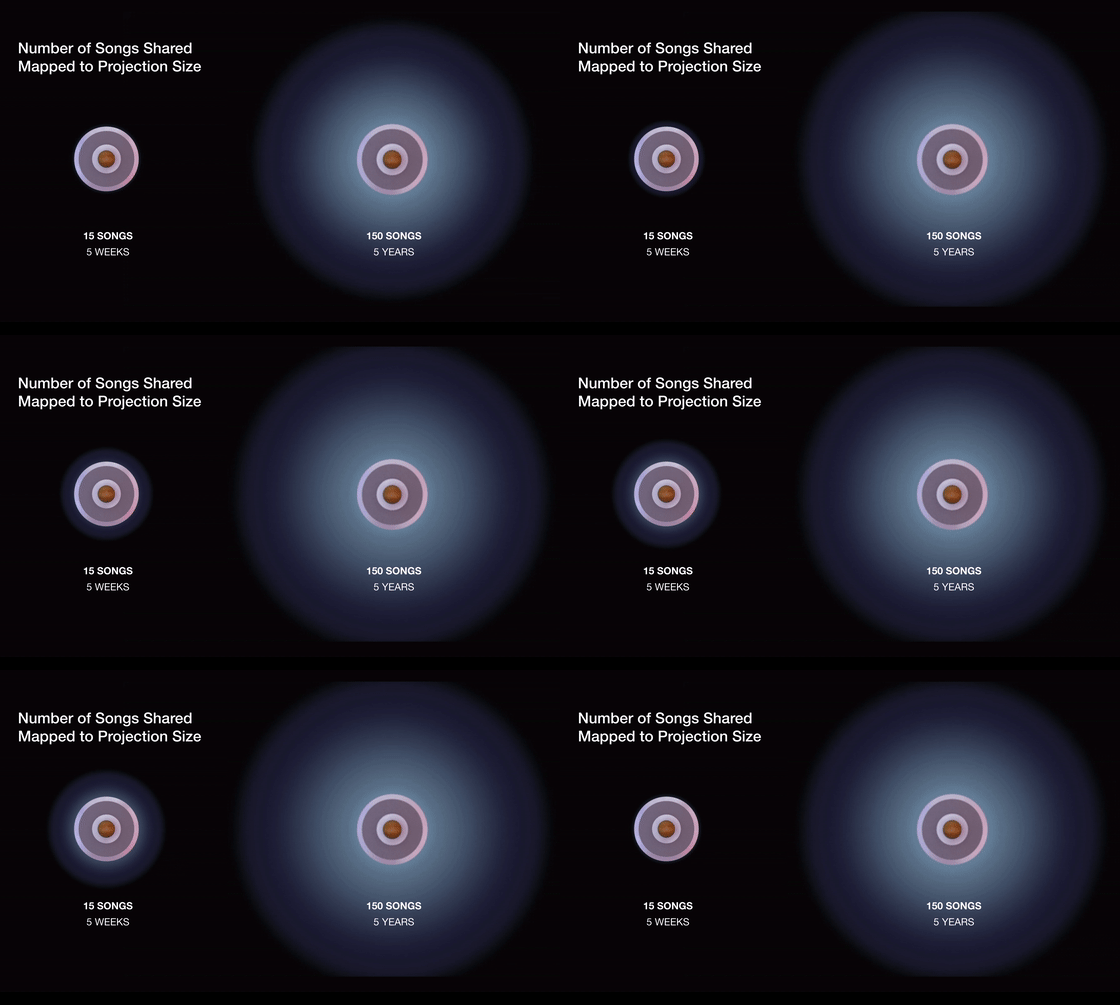
The concept uses density and scale to represent accumulated exchanges. The motion studies illustrate how the display could develop over weeks or years.
The wall-mounted display keeps the proposed listening history visible outside the app. The prototypes explore how an ongoing exchange could become part of a room.